Pesach Torah in the Time of Corona

Were we able to gather, we would have heard this morning in synagogue about the instructions for observing Passover and about the events we commemorate when we do. The Passover Torah reading for the first day includes Exodus 12:22, which recounts how Moses spread the word to the Israelites in advance of the tenth plague, the death of the firstborn in every Egyptian household. Moses tells the Israelites that after they have marked their doorposts so the Angel of Death will not include them in that horrible plague, they are to stay inside and not come out until morning. In the middle of the night, Gd struck the first born of every Egyptian family, from the palace of Pharaoh to the deepest dungeon. 

וַתְּהִ֛י צְעָקָ֥ה גְדֹלָ֖ה בְּמִצְרָ֑יִם כִּֽי־אֵ֣ין בַּ֔יִת אֲשֶׁ֥ר אֵֽין־שָׁ֖ם מֵֽת

By morning, “there arose a great cry, for there was no house where there was not someone dead.” The wail that rose up was a sound whose pain and power we can only imagine.

Yet here we are in 2020, staying in our houses except for the most essential of purposes, with a creeping dread that by the end of this plague, there will be no house unaffected. We, most of us, do not expect to escape this without someone we know dying. Some of us tragically have already crossed that aching threshold. The wail of the Egyptians is a sound that will unfold over time with us too. Flattening the curve only prolongs the wail.

These days are hard. Like the ancient Israelites, we are walled in and waiting for the danger to pass, hoping and praying that we will have posted enough of a sign on our doorposts to be spared.

Yet even in these hard days, we strive, when we can, to look for good. Maybe we are able to spend more unhurried time with loved ones than usual, or maybe we are able to take more walks or sit on the porch in lovely weather. We may feel a sense of solidarity with our neighbors that in times past would have eluded us. We may be reconnecting with old friends because we now all have so much time. We may feel a deepened sense of purpose through serving others in what ways we can. It’s no paradise but some of the moments are OK. For me, the overriding feeling is often one of in-between-ness. 

Screen Shot 2020-04-09 at 4.12.23 PMParting of the Sea of Reeds. Image credit: amboo who?
Just as the Torah reading today tells of a moment of suspense and dread, so too today’s Haftarah tells of a time of transition. As Joshua assumes the mantle of leadership following the death of Moses, Gd calls him to prepare the new generation of Israelites by having them circumcised. There was no circumcision during the years of wandering, and an entire generation needed to be re-introduced to this aspect of the covenant. 

וַיֵּשְׁב֥וּ תַחְתָּ֛ם בַּֽמַּחֲנֶ֖ה עַ֥ד חֲיוֹתָֽם

And [afterward,] they remained where they were, in the camp, until they recovered. (Joshua 5:8) 

As I contemplate these readings, I wonder about the ways in which we too are recovering from the feeling of having something essential taken away from us. School and work are on hold, and with them our livelihoods and the shape of our days. Worship is utterly changed, social lives are in upheaval. Our towns are like ghost towns. The isolation can be profound and unsettling. 

Yet as much as we miss our freedom of movement and — for many of us — a sense of basic safety and predictability regarding our health, there is also a spaciousness about this period. Remaining where we are, we recover from rushing about to meet too many competing obligations, recover from gliding past people and things that deserve our time and attention.

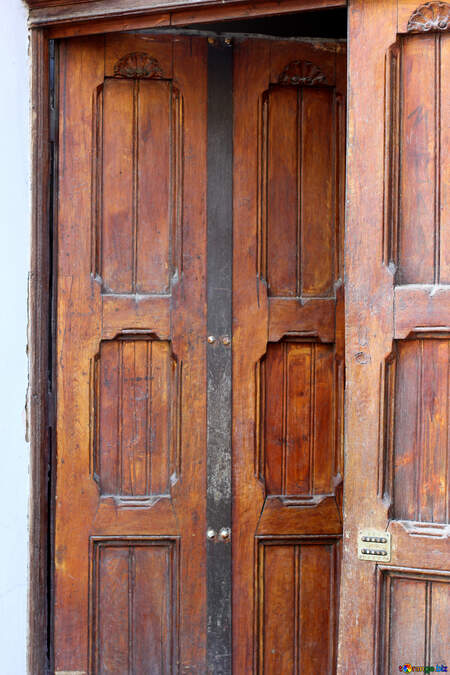
Open doorimage from torange_biz free photobankAnd then on seder night, the moment comes when we leave our close rooms and open the door wide for Eliyahu haNavi (Elijah the Prophet) to come in. Practicing the mitzvah of hachnasat orchim (welcoming guests), we step out onto our porches and usher in the one who is designated to tell us when it’s time for Moshiach to arrive. Eliyahu is said to attend every bris, and is evoked every week as Shabbat ends. He embodies the very notion of hope for better things to come. He doesn’t say when the change will come or what’s required of us, not in language that we can understand, but opening our door to Elijah is an act of optimism, of looking forward to something better. And then we start counting our way toward the revelation of Torah, toward Shavuot.
So tonight, whether you do a full seder or a creative riff on a seder or even just have the merest breath of a seder consisting of last night’s leftovers and a half-formed thought of the exodus, I encourage you to mindfully take on at least that part of welcoming Elijah. Get up from your table and open the door, to remind yourself that our people has endured many challenges and threats, and we will endure this one as well. There is always room at our table for hope.

Lean on Me

It was a regular Tuesday, and students were gathering in the black box theatre on the north campus of University of Michigan for choir rehearsal. Struck by some mysterious impulse, the choir’s accompanist, a pianist of extravagant talent and personality, sat down at the keyboard as we were filing in and started playing that recognizable chord progression. She played that slow ONE (hitch) one-two-three-FOUR (hitch) four-three-two-ONE (hitch), familiar as a beloved friend you hadn’t seen in a while, and we one by one began to sing. Kids from far away and down the street, kids from hard families and hard neighborhoods and Jills from the Hills.

Sometimes in our lives, we all have pain, we all have sorrow…

It’s happened to me a few times in my life that spontaneous group singing has settled into a magical groove that feels like it will never end. We young college friends just sang and sang, kept it going — part song, part pledge. Bill Withers’s lyric spoke to us, right in our sweetest spot.

You just call on me, brother, when you need a hand
We all need somebody to lean on… 

If that moment had lasted forever, I would not have been sorry.

It didn’t.

But maybe it did. Here we are now, in this moment. As pandemic envelops us all, far away and down the street, we need help from each other more than ever. I see it around my neighborhood and around the world: people sewing and delivering masks, people dropping off groceries and checking on isolated neighbors, friendships rekindling, people slowing down, somehow seeing one another more clearly from a distance.

If there is a load you have to bear that you can’t carry
I’m right up the road
I’ll share your load

Bill Withers died today at the age of 81, but this song continues to inspire. I have friends — true paragons of mitzvot, whose every action is in service to the greater good — who have taken to singing “Lean on Me” with their neighbors each night, everyone on their own porch. They live this lyric and teach me every day about kindness and service.

Lean on me when you’re not strong
And I’ll be your friend
I’ll help you carry on

May these words be true in all the works of our hands and hearts.

Accepting the Yoke

This morning I resumed my customary-not-customary prayer life with my community at Hebrew College. It was surreal, staring at my friends on a skittering screen, microphone on mute, reciting the words we say day by day, but with feelings I’ve never had before. So much about this territory is strange and unsettling: the noisy quiet of studying while the children are knocking around in the kitchen, the ghost-town feeling of my neighborhood as I’m out walking and see people from a scrupulously maintained distance, the empty grocery shelves, the feeling of having so much time, and none at all. There are moments that feel almost impossibly heavy and moments when I feel like I could blow away with the wind, like chaff.

And yet with all the swirl around me, I have experienced such intense feelings of connection and community. People I don’t know are banding together to support one another in myriad creative ways. People I do know have gone out of their way to say kind things to me, to encourage me that I’m on my right path even as the road hits a twist. 

Every morning, the liturgy invites us anew to imitate the angels by taking on על מלכות שמים (the yoke of Gd’s sovereignty). At Hebrew College we have a custom of looking around at one another at that moment and making eye contact. It is one of the most meaningful parts of my tefillah, and returning to those people today — even quivering on a screen — for that moment felt like coming home, even though I was home. 

And it struck me that the image of a yoke is perfect for this. A yoke holds us apart as it holds us together, mandating space and unity at once. Caring for one another during this crisis demands that we cultivate emotional closeness while maintaining physical space. Indeed we maintain that physical space as a way of caring for each other. The yoke joins us together. And as we are bound together, shoulder to shoulder, this yoke — the yoke of Gd’s sovereignty — also binds us vertically. It reminds us that while we are working side by side, Gd is holding us, too.

Areyvut |ערבות

Wonderful Rabbi Sharon Cohen Anisfeld, the President of Hebrew College, has noted that the term social distancing fails to capture the quality of caring and kindness that is motivating it, in this age of coronavirus. In light of the changing environment, I have been in contemplation of the phrase כל ישראל ערבין זה לזה — All Gd-strugglers are responsible, one to another (Ritva on Rosh Hashanah 29a).

The letters ערב in this form refer to responsibility, and indeed the Gemara includes a baraita taught by Ahava, son of Rabbi Zeira, saying that in most cases, one can say a blessing on another’s behalf. The commentary from the Ritva (Rabbi Yom Tov ben Avraham Asevilli) specifies that this is so, because we are responsible to one another. If I can take action to preserve your holiness, it’s a blessing for the both of us.

As we navigate the pandemic-tinged landscape, we are called upon to think not just about our own risk but about the risk we might pose to others, some of whose vulnerabilities we may not be able to detect. Thus we enact our responsibility, our ערבות, by thinking of how our actions might affect others’ well-being. 

The letters ערב can also carry a meaning of mixing. In a time when many are feeling insecure and unsettled, we seek to connect with others for support around our shared experience. We want to be held in community, to mix our hearts and thoughts with others’. We want to feel less alone. Yet we are obligated by the responsibility that we hold for one another — to maintain, at least physically, a caring distance. Our desire to mix is held in check. We feel mixed up. 

Vocalize it another way and add just one letter and you have ערוב, the makeshift border that some traditional communities reinforce each week before Shabbat, to make their space a shared space. The ערוב delineates where we are, together, making a neighborhood a home both ritually and emotionally. It is built and tended by human hands for the purpose of binding communities together. 

Vocalized yet another way, ערב means evening, or to bring on evening. Each night we say a beautiful prayer praising Gd’s skill for creating time just so, for keeping the holy clock wound just right, so that the moon and the stars make their appearance when they are needed, and stay the right length of time. The night sky becomes a blanket to hold us in the dark hours. 

In this darkening hour, I pray there may also be an even-ing. May those who are upset speak in an even tone, and those who are ill return to an even keel. May we strike an even balance between panicking and being cavalier. May we all see that even the poor and even the sick and even the lonely and even the frightened are within our ערוב and must be cared for with all our hearts.

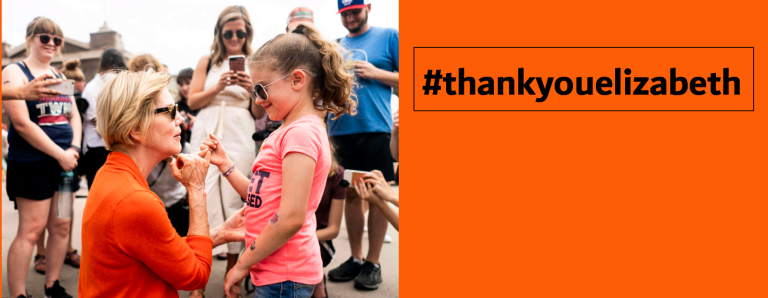
Dear Senator Warren

Dear Senator Warren,

As a constituent and an admirer, I write to thank you for your courage. Thank you for showing me a different way to be. I am a woman in my 50s, newly undertaking rabbinical study after nearly a decade of flirting with the idea. 

I grew up in a normal, happy family with amazing parents, and yet I was surrounded by a stealth misogyny whose depths I am only now beginning to recognize. I promise you that nobody in my family carried the intention of misogyny; we literally didn’t know that the standards we were reinforcing were shot through with patriarchy, with disgust for female accomplishment.

Indeed, I was socialized all my life to perform incompetence, to keep my intelligence under wraps, to keep my voice quiet and well-modulated. I heard over and over — you’re too loud, too smart, too emotional, too much. From an early age I was often the smartest person in the room, but I learned first to cover it and then to doubt it. I learned that smart girls were not attractive and that being pleasant and cute was valued more highly than being clever and capable. I learned that it was better to please others than to speak my mind or reveal my heart. 

Despite my attempts to soften my so-called edges, I often felt the social cost of female intelligence and capacity. I was ostracized for taking school and music seriously and for not having (or feigning) interest in sports (with one crowd) or substance use (with another). Every accomplishment came with both admiration and a warning. Great job! But you’re so intense. Why don’t you make some friends, get a hobby, chill out? Yet the price of making friends was diminishing my own intelligence in order to make people comfortable. It seemed I would need to choose between mind-numbing chit-chat and soul-crushing isolation.

Decades of this internalized self-hatred can poke holes in your heart. Sure, there were pep talks from well-meaning friends and teachers. But the loudest message I received was that people would be much more comfortable with me if I were almost successful rather than successful. 

Senator Warren, your candidacy has been a revelation and an inspiration. With every pinky promise, every brilliant debate performance, every geeky homegrown video, every rock-solid plan, you showed me a model of female competence and intelligence that didn’t shy from saying what needed to be said. 

I don’t anticipate you need a rabbi very often, but after June 2025, if you ever do need a rabbi, I’m your gal. 

Thank you for being your very self.

Kindness and shalom,
Naomi Gurt Lind

Four Blessings for Tu BiShevat

IMG_2655


Trees give us air to breathe, helping to sustain life. So, too, may you have a long, happy, healthy life. May you have space to breathe and may you breathe life into others by your example.


IMG_2660 2


Trees have roots that go deep into the ground and connect not only with the earth but with other trees. So, too, may you always know the joy of family, close friends, and a community to keep you company throughout your life. May you always be surrounded by people who love you and keep you connected.


IMG_2723


Tree trunks hold steady through harsh conditions. So, too, may you be held steady through life’s inevitable bumps. 


IMG_2727


The leaves of trees know when to hold on and when to let go. Called by the voice of nature itself, they follow a rhythm of their own. So, too, may you hear the still, small voice within you, and may it inspire you to a life of goodness in harmony with the world around you.

One Way and Another

Imagine a meeting of a twelve-step program: the circle of folding chairs, the people milling around. Here’s someone nursing a cup of watery black coffee. Here’s someone else, three days sober, skittering with anxiety. Here’s someone else silently weeping; he almost slipped last night and he is scared. 

The meeting begins. One by one, people introduce themselves.

I am Joey, and I’m the father of three beautiful daughters.

I am Prithi, and I sing cabaret.

I am Jake, and my house burned down two weeks ago.

I am Sarah, and I just launched a new tech start up.

I am Ella, and I am a full-time caregiver for my developmentally disabled sister.

I am Hakeem, and I am a published poet.

I am Geoff, and I can fix any car, anytime.

I am Lizzy, and I just lost my father.

Perhaps the setting lulled you into thinking that you know the people involved. How easy it is to assume that everyone at a twelve-step meeting has only one salient characteristic: their addiction. And yet…while everyone at the meeting has come there for support in coping with the effects of addiction, each one has his or her or their own path that’s led to this point. Each individual speaker is much more than the story of addiction that brought them to this moment. As beautifully expressed by Nigerian author Chimamanda Ngozi Adichie, in her TED Talk, The Danger of a Single Story, we are all made up of multiple storylines and multiple threads.

Screen Shot 2020-02-23 at 9.22.36 PM

It is tempting — nearly inevitable — to assume that we know somebody because we know one or two or even five things about them. Yet every single one of us contains multiple experiences, multiple cultures, multiple points of view.

What does Judaism do with this? How does our sacred wisdom prepare us to take this in, to navigate this space of riotous color and shimmering individuality? 

Screen Shot 2020-02-23 at 5.57.13 PM

Consider a page of Talmud. Laid out like a puzzle, or a paper with every inch of margin scrawled with notes and responses and questions, the Talmud is replete with conflicting ideas, interpretations, and viewpoints playing out on the page. Jewish learning is a boisterous conversation across time and space and involving multiple people, sources, and ideas. 

Like a page of Talmud, each of us is a flavorful combination of many different ideas, themes, characteristics, and experiences.

The multiplicity of identity has been playing in my mind quite a bit these past few days, as the news of basketball great Kobe Bryant’s death in a helicopter crash spread. This sudden, tragic loss of a young man is complicated by the fact that in 2003, Bryant was accused of raping a nineteen-year-old woman in a Colorado hotel. The charges were dropped when the woman declined to testify in court. She later brought a civil suit, which was settled out of court. Eventually Bryant acknowledged that he regarded their encounter as consensual sex while his accuser did not. He apologized.

Following this awful incident, Bryant went on to live his life in ways that suggest he learned and grew and changed. He became an outspoken supporter of women’s athletics. He eventually came to use his celebrity to support political causes that were meaningful to him. He became a father to four children, one of whom, sadly, died with him in the crash. 

I do not condone rape or sexual assault, but I do absolutely condone teshuvah. My feelings are complicated as the story of Bryant’s life and death plays out in the media against the backdrop of the pluralism learning my cohort has recently engaged in. If our lives all comprise multiple threads, what if one of those threads is truly awful? Is an otherwise good life ruined by one horrific act? Can an array of generous, wholesome choices, including a genuine apology, atone for one crude and violent one? What is the sum of a life?

We learned in our pluralism seminar that one definition of idolatry is the isolation and worship of a single aspect of the Divine, to the exclusion of other characteristics. Our teacher, Rabbi Sharon Cohen Anisfeld, extended the definition, writing, “It is similarly idolatrous to take one aspect of a human being — created in the divine image — and mistake it for the whole.” We are — each and every one of us — created in Gd’s complicated image, our very ordinariness full of mystery.

One way to understand Gd’s many facets is as multiple pathways to access the Divine. The Sfat Emet’s read on Sh’mot 20:15, in Rabbi Arthur Green’s translation, says: “All the people saw the voices. The voice was that which said, ‘I am YHWH your Gd.’ Each one of Israel saw the root of his or her [or their] own life force.” In this interpretation we see the interplay between singular and plural (voice and voices), the ways in which Gd is One and yet can be understood in infinite ways. Individual senses are blurred, such that sound is both seen and heard. Yet the voice that comes to each person is exactly the right voice for him or her or them, a voice tuned exactly to their frequency. 

Think also of the role of the new year in the liturgy and the calendar cycle: we celebrate the new year in four different ways and at four different times, focusing this time on redemption and this time on nature, this time on getting our economic accounts in order and this time in accounting for our souls and deeds. But day by day, we call for blessing on the year as part of the tefillah, asking Gd to make this year the best among the best. Each day is both a beginning and a continuation, each year a whole and a part.

One beauty of our tradition is that there both is and is not a single story of Gd. When addicts turn to a higher power, as in the vignette that opened this post, they are seeking the same thing — an anchor against the disorienting forces of addiction — but they each seek the aspect of it that will keep them, each in the fullness of their own individuality, centered. Just as the addicts resemble one another in one way but are thoroughly unique in other ways, so it is with Gd. The mechanic’s Gd and the caregiver’s Gd, the proud father’s Gd and the bereaved daughter’s Gd are One and not the same.

Daf Yomi and Dr. King

I am not doing Daf Yomi (because the space-time continuum) but I occasionally glance at it just the same. Today’s had some resonance for me on this Martin Luther King holiday, particularly about the side of Dr. King that faced up to racism and non-violence in such profound ways.
 
“Abbaye often said: One should always be straightforward and respectful. ‘Answer softly to wrath.’ (Proverbs 15:1) Increase peacefulness with family, with those around you, and with those you encounter, even the stranger in the marketplace, in order to be beloved above, kind below, and worthy of acceptance by all creatures.”
 
At the workshop I attended this morning alongside Child the Elder, a young Black woman talked with us in our small group about how hard non-violence is, about how tempting it is to want revenge, the more she learns about her history. Her courage and vulnerability are in strong contrast to the demonstrators — some of them explicitly associated with white supremacy organization — who turned up in Richmond, Virginia today to proclaim their attachment to weapons of violence. I wonder if those demonstrators think of themselves as increasing peacefulness.
 
We live in serious times. Increasing peacefulness seems like a good start.

A Progress Report in Two Parts

Sometimes the moments line up just right. For more than a year I have been coming to morning tefillah (prayer) at Hebrew College, since long before I started school. It was part of my grounding practice while I was in between, and it was instrumental in helping me to make my decision. In the course of that practice, especially at the beginning, I felt lost more often than not, sometimes extravagantly so. 

There was one day that was so unsettling that I wrote about it here. On that day, there were no guideposts in prayer, just an open space and a lot of people doing their own thing with what looked to me like unattainable competence. It was so unnerving I considered leaving, but was afraid people would notice me leaving and it might affect my chances of being admitted to the program.

Fast forward about a year.

This morning, just days from the end of my first semester as a rabbinical student, I came in for tefillah a few minutes late to find there were three other people there. All faculty. All engaged in their own personal, mostly silent prayer. There was a little mumbling, a little humming, an occasional snatch of recognizable text, a lot of page flipping.

I walked in, opened my siddur, and began to pray.

***

This afternoon I went to see one of my professors for a quick question. So I thought. Nearly two hours later, I left his office, having moved from the so-called quick question to a deeper conversation to impromptu study of a famous text about Rabbi Akiva. Akiva is one of my favorites, for two reasons: he happens to share a name with my beloved elder son. And he started studying as an adult.

The text I studied with my professor depicts a moment where Akiva contemplates the mouth of a well and muses to his companions: How did this stone get worn away? They tell him, The water falls on it every day. Haven’t you read that water can erode stone?

Akiva extrapolates a judgment for himself: if something soft can sculpt something hard, how much more can something hard, like words of Torah, shape something soft, like my heart?

And presently he began to study Torah.

Teach us how to see

Our parsha this week, Vayetze, continues the story of Jacob. When we last left our hero, he was skipping town in order to escape the wrath of his brother Esau, on account of Jacob’s having stolen Esau’s blessing from Isaac, their father. This was just the latest bit of trickery between the two brothers, and the trickery will continue into this parsha, with Jacob getting some karmic payback from his Uncle Laban, who makes him work for seven years to “earn” his beloved Rachel and then pulls a switcheroo and sends Rachel’s sister Leah on the wedding night. But I get ahead of myself.

One of the opening images of Vayetze never fails to take my breath away. Jacob is running from Beersheva toward Haran and he stops for the night. He makes a bed of stone to sleep on and while he sleeps, he dreams of a ladder with angels going up and down. In the dream, G-d promises Jacob numerous children and the land where he lies. When Jacob wakes up he is transformed and says these beautiful words:

יש יי במקום הזה ואנוכי לא ידעתי

G-d was in this place and I didn’t know it.

This parsha glimmers with allusions to vision and perception, starting with the dream-vision of angels going up and down the original “stairway to heaven.” There are things that are clear in a moment (like Jacob’s interest in Rachel) and things that reveal themselves over time (like the ways in which Laban and Jacob try to get the better of each other and Rachel’s struggle with infertility). And Leah, who is described as having weak eyes is actually quite perceptive about her place in Jacob’s esteem. Even with her weak eyes, she sees quite clearly that he will never love her.

All these variations on the themes of vision and perception have got me thinking about what it means to see clearly. We live our lives, many of us, looking at most a few feet in front of ourselves. Our lives are mediated by screens of one kind and another, and much of what we think we see on those screens is curated, manufactured, or outright fabricated. Searching for the truth seems to get more and more difficult with each passing day. And even when we manage to break free of our screens — at dinner time, on Shabbat, or what have you — sometimes it’s our minds and hearts that get in the way. We focus on weather or logistics or petty disagreements and don’t find it easy to level up and see what is most important.

When I was in high school, literally in the last century, I committed to memory a line from the book, “The Little Prince,” a line that felt profound to my teenage self: On ne voit bien qu’avec le coeur. L’essentiel est invisible pour les yeux. “We can only see clearly with the heart. The essential is invisible to the eyes.” As I studied and pondered the parsha this week in preparation, this beautiful little quote came back to me and with the experience of the intervening years, it felt perhaps even more profound than I’d realized. How often our perceptions change over time, as our hearts begin to see more clearly what is important! The more time and genuine presence we offer, the more clearly we begin to see. The uncooperative toddler begins to feel more like someone who is struggling to learn something new. We stop seeing our spouse as a collection of annoying habits topped off with a receding hairline and remember the kindness that made us fall in love in the first place. In these moments, our eyes get out of the way and our hearts do the work.

Now let’s go back a minute to those words Jacob utters when he wakes up from his dream. 

יש יי במקום הזה ואנוכי לא ידעתי

The phrase לא ידעתי means ‘I didn’t know it’ and within the word ידעתי is the word דעת. if you look up דעת in a dictionary it will say ‘knowledge or wisdom, but Rabbi Art Green taught me that it’s also used in Hassidic thought to refer to the mind of G-d. When Jacob awakens from his astounding dream, it is as if he has glimpsed the mind of G-d, or even more remarkable, he seems to have realized that his own awareness has something in common with the mind of G-d, that when he sees something amazing it is like peering into the mind of G-d.

In fact, in one of the blessings following the Sh’ma, G-d is referred to as the Rock of Jacob. I think that when Jacob sleeps on that rock, he is actually resting his mind with G-d’s, and just like the method of learning by osmosis by placing a book under your pillow, Jacob awakens with a clarity of vision that comes from having glimpsed the mind of the Holy One. 

We often go through life not realizing the holiness of what surrounds us. Whether we’re absorbed in work, or preoccupied with personal difficulties, or staring at a screen, it’s easy to go through the whole day — sometimes several days — without noticing that the sun rose and the world is pretty amazing. My wish for you this Shabbat is that you will go out from this service with a kavannah, an intention, of seeking and seeing more clearly all of the beauty and purpose that surrounds you. Perhaps if your eyes and your heart are truly open, you will even catch a glimpse of דעת, the mind of G-d. Shabbat shalom!