This is my other piece on Eikev this year, written for the Hebrew College 70 Faces of Torah blog.
Click here to read it.

This is my other piece on Eikev this year, written for the Hebrew College 70 Faces of Torah blog.
Click here to read it.
Shana tova! Thank you for the pleasure of bringing in the new year with you, and for the honor of offering a few words of Torah today. As I scanned both the landscape and my inner stirrings for what to speak about today, I was struck by just how many threads there are to pull. I could address any number of pressing global issues: the ongoing public health crisis and its economic, mental health, and social aftershocks; the growing outcry for racial and economic justice; the catastrophic weather that practically screams in our ears that climate change is looming closer than any of us feels ready to reckon with; and a society in which the values of freedom and individualism are in mortal conflict with the communal commitment of caring for one another. The world feels like too much to take in, and yet the need to pay attention and take action is more urgent than ever.
I don’t know about you, but I am exhausted. Don’t misunderstand me; I am happy with my life and I deeply recognize my many blessings. Yet I often find myself wanting to pull the covers over my head because there is just so much turmoil — calamity everywhere I look.
And then the question comes to me, over and over: What do we do when we feel overwhelmed and caught in the middle, when the forces swirling around us start to feel like drowning? When is it a moment for reflection, and when is it a moment for action?
Which is it now?
Of course it is now — and always — both. Our texts for this season point us in both directions, toward introspection and discernment and toward the never ending work of tikkun olam.
Both reflection and action constitute a kind of presence to the Divine — whether it is presence to the still, small voice that guides us on our way, or presence with the righteous work that still, small voice calls us to.
I have been reflecting a lot on both types of presence lately. In this historical moment we are more acutely aware than ever of presence and absence. The great blessing of being in the same space as other people is something whose importance many among us hadn’t fully realized until it became a scarce commodity. All those months of missing people or of seeing them only behind a mask or onscreen lent an air of unreality, of watered-down-ness to our relationships. This past year and a half, I think we have come to realize how much our sense of the presence of others is rooted in seeing their faces. In Hebrew, the word פָּנִים neatly encompasses this idea: its definitions include both face and presence. In the inflected form ָלְפָנֶיך heard so often throughout our liturgy, it means, “before you” — literally in your presence and in front of your face.
Psalm 27, which many of us recite daily from the beginning of Elul through the end of Sukkot, offers a rich meditation on the idea of connecting face and presence. Verse 8 reads:
לְךָ אָמַר לִבִּי בַּקְּשׁוּ פָנָי — אֶת־פָּנֶיךָ יְהֹוָה אֲבַקֵּשׁ׃
This is a puzzling verse, one which opens up a theological question. A traditional approach to the Biblical Hebrew yields the translation, On Your behalf, my heart says to me, “Seek My face!” and I do seek Your face, o God. The psalmist’s heart advocates on the part of God, imploring for the speaker to seek out the presence of God. The Spanish commentator Ibn Ezra likens the heart to God’s שליח, God’s representative. He sees the heart as a Divine internal compass calling the Psalmist into stillness and searching. However, a more contemporary interpretation of this verse, taking into account modern Hebrew usage, switches the roles around — My heart says to You, “Seek my face!” O God, I seek Your face. In this reading, the Psalmist is asking for God to recognize him, and pledging to do the same. This reciprocal recognition, which posits both God and the Psalmist as seekers, changes the theology, casting the still, small voice as… more of a duet. The next verse continues: אַל־תַּסְתֵּר פָּנֶיךָ מִמֶּנִּי Do not hide your face from me. The stakes are high, located in the fear of not connecting, of all of this searching being met with nothing. Yet the psalmist persists. The last verse reads:
קַוֵּה אֶל־יְהֹוָה חֲזַק וְיַאֲמֵץ לִבֶּךָ וְקַוֵּ֗ה אֶל־יְהֹוָה׃
Hope toward Adonai! Keep your heart strong and courageous, and hope toward Adonai! Regardless of who is doing the seeking, the psalm invites us into quiet reflection and hope, even amidst turmoil, asking us to search for the presence of God and wait.
Our Haftarah for today, on the other hand, demands that we act. This fiery speech from the prophet Isaiah is full of action words, exhortations, imperatives — Build up a highway! Clear the path! Remove the obstacles! You can practically see Isaiah shaking his fists, trying to get his people to pay attention. Isaiah derides the people who fast in body only, while remaining spiritually unmoved. Such empty ritual strips the fast of its meaning and import. Rather, Isaiah says: “This is the fast I desire: to open the bonds of wickedness, shake off the yoke, let the oppressed go free! Share your bread with the hungry, take the poor into your home, clothe the naked! Do not turn away from your flesh and blood!” He goes on to promise that if our fasting and introspection inspire us to do those things, then the presence of God will be with us.
אָז יִבָּקַע כַּשַּׁחַר אוֹרֶךָ וַאֲרֻכָתְךָ מְהֵרָה תִצְמָח
וְהָלַךְ לְפָנֶיךָ צִדְקֶךָ כְּבוֹד יְהֹוָה יַאַסְפֶךָ
Then your light will burst forth like the dawn, and you will immediately return to flourishing. And your righteousness will walk before you, the presence of God will gather you in.
Where Psalm 27 calls for reflection, Isaiah urges us to press that reflection into service, to take up our sacred task of tikkun olam. The values of stillness and action are not in conflict but rather in dialogue. Our alternate Torah reading for today, from Deuteronomy chapter 29, says:
הַנִּסְתָּרֹת לַיהֹוָה אֱלֹהֵינוּ
וְהַנִּגְלֹת לָנוּ וּלְבָנֵינוּ עַד־עוֹלָם לַעֲשׂוֹת אֶת־כָּל־דִּבְרֵי הַתּוֹרָה הַזֹּאת
The hidden things are for God, but the revealed things are for us and for our children, to enact all of these teachings into eternity. So, yes, the quiet matters are between us and God — discerning, reflecting, finding our way. But once we’ve found that way, we must stand tall and translate thoughts into deeds.
The activist Sandra Steingraber wrote, “We are all musicians in a great human orchestra, and it is now time to play the Save the World Symphony. You are not required to play a solo, but you are required to know what instrument you hold and play it as well as you can. You are required to find your place in the score. What we love we must protect. That’s what love means. From the right to know and the duty to inquire flows the obligation to act.”
Steingraber’s words are a summons to righteousness, an echo of the principle from Pirkei Avot that we are not required to complete the work but neither are we free to desist from it. Each of us has a role to play, no matter how humble and incomplete. We need simply to find our place, to do something.
My blessing for you this Yom Kippur is for deep, soul-filling reflection that nourishes you toward action, in whatever direction you are called.
Gmar chatima tova!

[This is the sermon I delivered on Yom Kippur 5780 at Shir Hadash Reconstructionist Havurah in Newton, Massachusetts.]
Shana tova! How’s everybody holding up?
So here we are, midday on Yom Kippur. Those among us who observe by fasting are probably starting to feel it. Let’s take a few breaths together to get centered.
Breathing is underrated. We do it all the time: sometimes with intention, sometimes absent-mindedly, sometimes frantically, sometimes with awe and wonder. It is easy to take breathing for granted…until you have a terrible cold, or are singing a really long note, or are in the company of a skunk. Yet breathing, when you pay attention to it, can be soul-filling.
The Hebrew language makes a pretty strong connection between breath נשימה [neshima] and soul נשמה [neshama]. Technically you might say that breath is just the air going in and out of our lungs, but clearly the Hebrew language wants us to think more expansively about it. Breath is not merely anatomical but spiritual. When we breathe, we are somehow gaining access to our very souls.
In fact, the two words are sometimes translated as though they are interchangeable. Psalm 150, for example, describes praising G-d with different instruments: shofar, harp, tambourine, lute, cymbals … and finally, ecstatically:
Some translators interpret that line as: “Let all that breathes praise G-d; hallelujah!” while other translators interpret it as: “Let every soul praise G-d; hallelujah!”
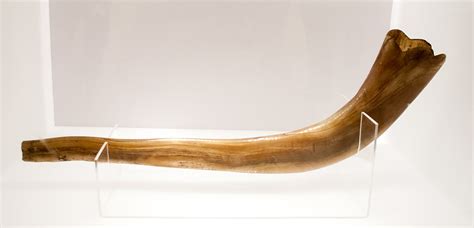
Rabbi Sharon Cohen Anisfeld, the President of Hebrew College, teaches, “the sound that comes through the hollow bent horn of a ram is the sound of human breath, amplified, so we might hear it.” We spoke last week about the ways in which the sound of the shofar wakes us up. In our short chevruta study, we directed our thoughts to the ways in which the shofar calls us to remember what’s most important, and in these past ten days of teshuva, we have, each in our own way, been coming to terms with the ways in which we may have fallen short of our highest aspirations, taking stock of the relationships and concerns in our lives which merit deeper attention.
So last week the shofar woke us up to the need in the world… but it was kind of a cliffhanger. This week, those who observe this way up the ante with a 25-hour fast. In this time of intense soul-searching, we deprive ourselves of the pleasures of the body so that we can really focus on the needs and longings the shofar blast awakened us to. But I’m sure I don’t need to tell you: it is easy to get so focused on our individual discomfort that we lose track of the purpose of the fast.
Today’s haftarah reminds us of this. Isaiah has a few things to say about the prospect of an empty fast. In verse 3, the people complained to G-d: “Why, when we fasted, didn’t You notice? When we starved our bodies, did You pay no heed?”
Finishing the verse and going on, Isaiah posits G-d’s answer: “Because on your fast day, you see to your business, and oppress all your laborers! Because you fast in strife and contention, and you strike with a wicked fist! Your fasting today is not such as to make your voice heard on high. Is this the fast I desire, a day for people to starve their bodies? Is it bowing the head like a bulrush and lying in sackcloth and ashes? Do you call that a fast, a day to be right with G-d? No, this is the fast I desire: to unlock the fetters of wickedness, and untie the cords of the yoke; to let the oppressed go free; to break off every yoke. It is to share your bread with the hungry, and to take the wretched poor into your home; when you see the naked, to clothe him, and not to ignore your own kin.”
Now. One of my touchstones in this world is listening to my children breathe. When they were little enough that I could hold them, the sound of their breathing became like the sweetest music to me. Even now that they are older (and probably mortified right about now!), I find contentment and spiritual solace in hearing their breaths, in and out, in and out. When I go in to wake them up in the morning, I sometimes take a moment of quiet in their room before I do the deed, so I can listen to them breathe. It fills my soul.
A couple of weeks ago, along with several friends from Hebrew College, I participated in the Massachusetts Climate Strike. I went for lots of reasons: I was motivated by a feeling of frustration at the way the pace of scandal in the current administration leaves us unable to focus on the most consequential matters because we are too busy being shocked about the latest outrageous tweet. I was motivated by a desire to stand side by side with the young leaders and activists I share my days with. Most of all, though, I was motivated, perhaps selfishly, by the hope that my children would have air to breathe, G-d willing, long into the future, and that they could one day know the pleasure of hearing their own children breathe.
The more I read and learn about it, the more urgent I realize the climate change crisis is. According to the UN report from March of this year (or last year according to the Jewish reckoning) scientists believe that we have just eleven years before the damage wrought by climate change is irreversible.
We have seen some climate-related devastation already in the form of melting polar ice, species extinctions, and the increasing frequency of storms whose strength would once have qualified them as once-in-a-century events. Just the damage caused by the last few hurricane seasons should be enough to get our attention. In the Bahamas alone, over 70,000 people were left homeless after Hurricane Dorian. Two years ago, the death toll from Hurricane Maria’s devastation was nearly 3,000 in Puerto Rico. And nearly fifteen years after Hurricane Katrina, parts of New Orleans are still struggling to recover.
As with most things, the effects are worst on those who have the least, but you don’t have to be impoverished or live in a coastal area to be affected. Climate-related disasters have wide-ranging intertwined effects on wildlife, beach erosion, tourism, epidemics and other issues around the spread of disease, economic stability, migratory patterns and more. Everything that happens in an environmental or weather event touches off other consequences in many arenas.
Getting interested in the climate crisis is about much more than hugging the pretty trees and protecting the wide-open spaces we love. This truly is — or should be — a matter of global concern, and of global action.
So what can you and I do? We have little influence, little economic power. Even my modest lifestyle, my commitment to reusing and recycling, my efforts to emphasize real food made with recognizable ingredients — all this still feels like whistling in the wind compared to the enormity of the problem. Yet when I marched with 40 folks from Hebrew College alongside an estimated 7,000 people — that’s a lot of whistling! And the global numbers are quite staggering. The folks who do this kind of counting estimated that at least one million people participated worldwide in the climate strike in September. Imagine the noise that a million people whistling can make! It might even rival the shofar.
Clearly there is much work to be done, and if we all work together we can make a difference. If I decide no longer to use single-use plastic such as plastic cutlery & cups that’s one thing. If we all do, that’s something more. If we model this one small change and talk it up in our workplaces and with our families and friends, we can really begin to make a difference. And that is just from one small change. One of my fellow students pledged publicly to give up driving to and from school one day a week in favor of public transportation, and I am working on the carpool logistics to be able to make the same pledge. Whether these small changes speak to you, or something else does, I urge you to consider what you can do to increase your positive impact on the world.
As we read in the maftir today,
“See, I set before you this day life & good, and death & adversity. For I command you today, to love Adonai your God, to walk in G-d’s ways, and to keep G-d’s commandments, laws, and rules, so that you may thrive and increase, and that Adonai, your G-d, may bless you in the land that you are about to enter and possess.”
These words are as relevant today as they were originally. The land is crying out for us to make different choices, to contemplate the gift of Nature that G-d gave into our care in B’reishit, and to exercise our stewardship in a more responsible and thoughtful way.
There is a line in our Yom Kippur liturgy that we chant several times,
We are Your inheritance and You are our fate.
I’ve been pondering what it means to say that we are G-d’s inheritance. It’s puzzling — G-d doesn’t have possessions in the conventional sense. And from whom would G-d have inherited anything anyway? Who could possibly be further up the food chain?
One day recently when I was out walking in the woods and thinking about this beautiful planet whose creation we had nothing to do with, but whose gradual destruction we might be witnessing, I began to see it in a different way. It’s not that we are an inheritance in the sense that an old family wristwatch or a stash of love letters between long-dead ancestors might be. Rather, we are an inheritance in the sense of what’s left behind. We are what’s left, the remnants of the people before us, and the people before them, and the people before them. G-d is counting on us. Let’s step up, so that the “inheritances” ahead of us — our children, and theirs, and theirs after that — will have air to breathe, water to drink, space to live, and please G-d, a world at peace.
G’mar chatima tova!
 Jewish Themes: A Blog by Rabbi Naomi Gurt Lind