Yom Kippur for TAA

Delivered October 2, 2025

Imagine you wake up at the same time every day, make the same breakfast, drive the same route, do the same work, come home, same dinner, same bedtime, rinse and repeat. Then one morning a pipe bursts. Your kitchen floods. Everything is a mess, and your routine is hopelessly disrupted. You call plumbers; you have to eat out; you can’t do your kids’ drop-off; your plans crumble. The chaos jolts you out of your rhythms, and you start to notice things differently. You see what you take for granted; you ask for help; you reconsider priorities.

Similarly, Yom Kippur bursts our life’s patterns. So much of what we do by habit during the rest of the year is altered today—from speaking Baruch Shem Kvod Malchuto aloud, to fasting, to fixating on our own mortality. On this day, God orchestrates a “flood” in our internal life, forcing us to attend to what really matters.

The liturgy today takes us to dark places, describing in excruciating detail the many ways that we could have, and probably did, go off the rails over the past year. We stand for long intervals of time, beating our chests, naming every imaginable human frailty. And then we do it again, and again, and again. We grapple with the imagery of God weighing our lives in the balance over the past 10 days, and deciding before havdalah, whether we will live or whether we will die. And if we die, in what manner. 

And then there’s the Torah reading that picks up after the sudden, shocking deaths of Aaron‘s sons, Nadav and Avihu, and asks Aaron to go on as normal, to resume his priestly duties with precision and dispassion. 

Not to mention the haftarah, with its disdain for the Israelites’ insincere attempts at atonement. 

The eye of the needle we are hoping to thread with our teshuvah is very thin indeed. 

Back in July, I attended the funeral of my teacher Judith Kates’ beloved husband Bill. Now Bill was the kind of person about whom everybody felt like they were his best friend. He managed to find time and authentic attention for each person: not just skimming the surface, but allowing a depth of connection to blossom with each encounter. It didn’t take a burst pipe to get him to pay attention to what matters. 

One of his friends, speaking at the funeral, said something which is still with me months later: the unbearable was always part of the conversation. The friend meant this as the highest compliment. He was talking about how Bill had the capacity to face what most of us avoid. The unbearable was always part of the conversation.

Yom Kippur, more than any other holiday, forces us to confront the unbearable. The restrictions of this long day give us no way to distract ourselves from hard truths: no food, no electronics, no idle chitchat. Our purpose today is clear, almost too clear. There is no escaping the unbearable on Yom Kippur.

The menu of unbearable things is unusually robust this year: for the US, for the world, and for the Jewish people as a whole. Without breaking a sweat, I’m sure any one of us could come up with a fistful of unbearables: war in Ukraine, soon to enter its fourth year; spiraling violence, including the attack on the Mormon church in Michigan this week that left five dead and the church badly damaged and the attack just this morning in Manchester England, whose details are not yet known; the dysfunctional American leadership that squanders the privilege of their position to engage in callous brinksmanship, playing Russian roulette with our lives; the indiscriminate crackdown on immigrants in the US and elsewhere; and of course, perhaps the most unbearable for many of us in this room: the catastrophic war in Gaza that has the Jewish community on the defensive both internally and on the global stage.

Judging by the tone of the Rosh Hashanah sermons from other rabbis that have been forwarded to me in the past ten days, it seems that many of us feel the urgency of the conflict in Israel and Gaza. I know our community is not uniform in its point of view about the crisis, nor should it be. And as I write this, just days before unplugging for the holiday, it’s impossible to predict whether the Trump-Netanyahu peace plan on the table will actually settle things down or serve as yet another spark to further ignite an already terrifying conflagration. I genuinely don’t know what will happen next and if it will be to the good. Nobody does. But taking to heart Bill Kates’s practice of allowing the unbearable to be part of the conversation, what feels important is that we allow ourselves to talk about it, even if we don’t have all the answers, even if it feels almost unbearable.

And as I am your no-longer-quite-so-new rabbi, you should know who I am and where I struggle. You should know what I find unbearable. We should be able to have this conversation, despite how much it hurts, despite it revealing some tensions. We should address it, knowing that we will be called upon to be there for each other in community even where we disagree. As I said last night, our task is to make a heart of many rooms. Let me show you around some of the rooms of my heart.

Like many rabbis, I find myself paralyzed at the crossroads of loving Israel and feeling deep misgivings about the direction of Israeli policy. I believe without question in Israel’s right to exist, just as I believe in Israel’s responsibility to be the embodiment of Jewish values. I say all this with a good deal of humility, knowing that I don’t live there and don’t face the rammings, bombings, and daily rocket attacks (which had been going on long before October 7). 

The devastation of Hamas’s barbaric attack, and the ongoing hostage situation, now 727 days in, is impossible to overstate. In those first horrific days and months, I was blind with rage and pain. No amount of warfare would have felt like too much. Yet as the war grinds on, I have come to feel that it is no longer serving a purpose. In fact, it seems more and more that the war in Gaza is making Jews less safe everywhere, and is doing nothing to bring home the remaining hostages. 

Meanwhile Gaza is in ruins and another generation of Palestinians is in the position of seeing Israelis and Jews as oppressors—and their advocates are forcefully making that case to the world at large. Whether or not this is objectively accurate is of no consequence when, aided and abetted by simple-minded but extremely effective propaganda and slogans, Israel’s detractors are growing ever more strident with their conviction that the very existence of the Jewish state is untenable.

These lines from the Haftarah: 

הֲכָזֶה יִהְיֶה צוֹם אֶבְחָרֵהוּ
Have I chosen a fast like this?

are impossible to hear without thinking of the starvation taking hold in Gaza. 

The words:

וְעַל חֵטְא שֶׁחָטָאנוּ לְפָנֶיךָ בְּאִמּוּץ הַלֵּב
And for the sin we have committed before you by hardening our hearts

are impossible to hear without thinking of how easy it is to turn away from the suffering of hostage families and Gazans alike.

The words: 

אֵין דָּבָר נֶעְלָם מִמֶּךָּ וְאֵין נִסְתָּר מִנֶּגֶד עֵינֶיךָ
There is nothing hidden from You, and there is nothing secret in Your eyes

are impossible to hear without wondering how all this will turn out, or even what’s true amidst the swirl of impassioned polemics. 

Having encountered each of these phrases and many more that trouble me over the course of this solemn day of soul searching, I wonder—and perhaps you do too—where to draw courage from as we navigate so much that is unbearable. 

One resource is teshuvah itself, the reason for the season, so to say. Breishit Rabbah, a collection of Midrashic literature from the fifth century, teaches in the name of Rabbi Abahu bar Ze’ira: ”Great is teshuvah, for it existed in the world before Creation.” What this says to me is that the work of teshuvah is foundational. It’s part of the makeup of this world; the work of teshuvah is eternal, woven into the fabric of all creation. Human beings are made to sin, to regret, to try to make it right. That we, as Jews, choose to make it a core practice in our lives and to surface it in particular at this season is reinforced by its origin story in our tradition.

Another resource takes us back to that funeral I attended over the summer. The unbearable was always part of the conversation. Part of what made Bill Kates so special was his ability to accompany the people he cared about into the realm of the unbearable. Indeed we can bear so much more when we bear it together in relationship and in community. The conversation is more than just talking together. It is the way we meet one another with care, bring out one another’s deepest concerns, hold one another’s needs with gentleness and curiosity. The conversation is a million invisible threads that weave us together in our vulnerability and our striving toward wholeness. 

As we confront the too many unbearables of the current moment, let us do so in conversation and in community. Let us allow the stark Yom Kippur liturgy, with its insistence on the first person plural—Ashamnu—WE have been guilty; al Chet shechatanu, for the sins which WE have committed—let’s allow that sense of “we” to do its work on us and forge us into a collective. Let us hold each other, regardless of our individual political orientations, in the crucible of teshuvah and hold ourselves accountable for discerning how we can most be of use in this tragic but redeemable world. 

Shanah tovah.
Kol Nidrei / Erev Yom Kippur for TAA

(Delivered October 1, 2025)

When I was little, my mom had a cute habit of pretending she couldn’t quite make me out. I’d get up in the morning and go find her, and she’d say, “Is that you?” Although I do have three siblings, we are different enough from each other and far enough apart in age that I’m pretty sure my mom knew it was actually me. But still, it was fun to play the game, and to get that delicious moment of recognition when she would act like she couldn’t believe her luck at running into me, as if we’d been apart for decades, not hours. 

Looking back on it as an adult, I can see in her question, “Is that you?” more depth of meaning than either of us probably imagined during those days of practiced silliness.

The world we live in today seems designed to prevent us—parents and children, friends, partners, and strangers alike—from truly seeing one another. So many aspects of our lives are mediated: by the screens that dominate our waking hours; by the modern definition of work, which presses us to keep up a punishing pace, with no room for reflection or connection; by a poisonous algorithm that daily divides us into sharp categories designed for maximum agitation and isolation. Day by day, I encounter people who are even considering cutting off ties with someone they went to high school with, or with a co-worker, or, God forbid, with a child or a parent, because their political beliefs are so far apart as to make it impossible to talk without opening up a painful, unbridgeable chasm between them. Throughout these recent years of recreational rage, controversy and contention, I pride myself on not having broken off any relationships, but even I have to admit to a whole lot of avoidance. The much-talked-about polarization of American discourse has led to too many slammed doors, literal and figurative. As Rabbi Tali Adler puts it, “We have started to see each other … not as neighbors but as people who think the wrong things.” 

As always, I look to our tradition for guidance, if not precedent. As folks who participated in Backyard Mishnah this summer may remember, I have a fondness and an emotional connection with the Sages of the Rabbinic period. Even as foreign as it feels to us in terms of daily life, the world of the ancient Rabbis had more than a little bit in common with our world today. Like us, the Rabbis found themselves facing prejudices and violence because of who they were. Like us, the Rabbis found themselves in a place of profound alienation from cultural norms that had once seemed unbreakable. Like us, the Rabbis found themselves navigating profound communal disagreements that could have broken them apart. But also they found themselves with a sense of purpose: having lost their Temple and their homeland, they sought to reimagine every aspect of the world from the vantage point of their exile, as they built a new Judaism from the broken shards of the old one.

Despite the fact that we live very different lives from theirs—not many of us are blacksmiths or ride to and from work on a donkey, much less spend all our days reading, reciting, and memorizing Torah—even so, perhaps some of the principles they derived speak to our current day.

One core teaching comes to us from chapter 7 of Tosefta Sotah, a compilation of Jewish law from the second century. In the chapter, the Rabbis are grappling with ambiguities of meaning in the Torah and looking for a way to resolve the contradictions. In a mysterious and perhaps slightly maddening example, they look at the appearance of these three similar but different citations from Parshat Yitro: דברים  הדברים & אלה הדברים—words, the words, and these are the words. To the Rabbis, these almost-repetitions are different enough to raise curiosity, and so they wondered together, why the difference? Is one expression more valid than another, and if so, why? Which is the right one, the authoritative one? 

The way they resolve the question is subtle, and opens a way to abide this and other disagreements: כָּל הַדְּבָרִים נִתְּנוּ מֵרֹעֶה אֶחָד—All these things / words were given by one Shepherd. That is to say, the Torah can refer to things in different ways because it’s all part of a greater whole. There doesn’t have to be one and only one way to understand something. And from that, the Rabbis offer a gorgeous image to harmonize the principle:

 אַף אַתָּה עָשָׂה לִבְּךָ חַדְרֵי חֲדָרִים—Only make yourself a heart of many rooms.

A spacious heart, with capacity for understanding multiple viewpoints, can hold the uncertainty of not knowing, can open the imagination to a deeper understanding of the role that perspective plays in our experience.

Luckily for us, the Rabbis didn’t insist on unanimity—or worse, on one opinion being right and the rest being thrown out. Instead, as even a cursory look at a page of Talmud will show, they kept everything, almost like hoarders of ideas. Text and commentary, argument and counterargument, secondary and tertiary conclusions and legal derivations are all present on the page, allowing us to access a conversation across time and space, a conversation we are invited to join. Had the Rabbis looked for a single answer, the beauty and richness of our tradition would have been watered down to nothing, and it’s quite possible that Judaism as we understand it would not have survived. 

Holding one another’s perspectives with reverence in a time of upheaval  required the Rabbis to overcome their impulse toward avoidance. Instead, they made a spiritual practice of getting closer, of listening with curiosity about what was underneath their disagreements. Masechet Brachot page 9b finds them considering the question of when to say the morning Shema. That is to say, when is the light sufficient to be defined as morning? A few possibilities are offered in the Mishnah’s argument: Perhaps morning is defined as the moment when a person can distinguish blue from white. Or perhaps, as Rabbi Eliezer says, it’s when one can distinguish blue from green. The Gemara carries the discussion forward, with different voices introducing different possibilities: Rabbi Meir suggests it’s when you can distinguish two similar animals, like a wolf and a dog. Rabbi Akiva narrows the difference, saying when you can distinguish a donkey from a wild donkey. Still others say that morning comes when you can recognize the face of a neighbor from four cubits (or six feet) away. Ultimately the halachic ruling is with this final position. 

The Rabbis’ concern here is not just to button down when to say their prayers; we wouldn’t be so interested in this text thousands of years later, if that were the case. Rather, they’re teaching us the value of truly seeing. They’re teaching us how to pay attention, how to treat the moment, and one another, with reverence. In a similar vein, the Torah teaches in Exodus chapter 10 verse 23 that during the plague of darkness (familiar to us from the Pesach Haggadah) neighbor lost sight of neighbor, such that everyone was immobilized during the time of darkness. The physical darkness became a kind of existential metaphor: it’s not just tripping over the furniture, it’s that everyone became unhinged without the reference point of other people.

In our own time, as it grows harder and harder to see one another clearly through the distorting lenses of social media, a poisonous political discourse, and disproportionate representation in the public square from the toxic fringes; our timeless tradition offers an antidote. Indeed, it’s at the moment of the morning Shema—the moment the passage in Brachot is referring to—when we gather the fringes of our tallitot to symbolize the reunion of our entire fractious people. We declare the unity of God with all those fringes in our left hands—closer to the heart!—with threads of hope binding us together. We have no illusion that all of those fringes will all point in the same direction, but we do know: the vastness of God is able to contain their variation.

The Rabbis of the Talmud modeled for us the capacity not only to tolerate different points of view, but to learn from them. They implore us to teach our mouths to say, “I might be wrong.” And, “Tell me more.” And, “What I’m hearing from you doesn’t align with how I’ve been thinking about this, can you help me understand how you got there?” 

I want to be clear that I’m not advocating for changing our minds with every conversation, or for moral relativism. In the words of Dylan Marron of the podcast Conversations with People who Hate Me, “Empathy is not endorsement.” What I am advocating for is meeting one another with the courage to listen for the sake of understanding: for protecting our own humanity by acknowledging the other’s humanity.

Our Rabbinic literature is itself a conversation that’s been preserved because of the Sages’ open, searching minds, and their dogged determination that what we shared as a people was worth saving, despite the violence done to us and the destruction we suffered. Our ancestors invite us, in turn, to imitate their dogged determination—to see and hear one another, the better to save what can be saved. The better to save what can be saved.

The Rabbis offer a cautionary tale as to what can be lost when we stop seeking one another out, when we let insult and stereotype close off the doors of our hearts. In Masechet Baba Metzia 84a we encounter Rabbi Yochanan and his protege and havruta (study partner) Reish Lakish. When they first meet, Reish Lakish is a career criminal. Rabbi Yochanan sees his intellectual potential and convinces him to leave the bandit life and become a Torah scholar. They enjoy years of passionate yet respectful disagreement in their learning together, until in one debate about weaponry, Rabbi Yochanan blurts out a reminder of Reish Lakish’s past as a criminal. This vicious insult causes Reish Lakish so much emotional pain that he falls ill. Even then, Rabbi Yochanan refuses to apologize for his hurtful comments. It’s only after Reish Lakish dies that Rabbi Yochanan realizes the consequences of his harsh words, and laments the heartbreaking loss of his beloved partner in respectful dispute. He tries to find a new havruta, but nobody is able to challenge him the way Reish Lakish had done. Filled with remorse for having broken what was most important to him by allowing for an element of contempt to bubble up in their productive disagreements, Rabbi Yohanan himself goes mad and dies.

The ancient Rabbis saw their world shattered; they knew the perils of conflict in which respect is not a touchstone. And so, in addition to reinventing Jewish practice, in addition to preserving and elevating the work of their learning—the Sages also sounded a warning as piercing as a shofar call. Even, or especially, in times of moral degradation, seeing the divine image in one another—and acting in the image of God—are non-negotiable.

As we read in Pirkei Avot,

בְמָקוֹם שֶׁאֵין אֲנָשִׁים, הִשְׁתַּדֵּל לִהְיוֹת אִישׁ
In a place where there is no humanity, strive to be human.

Let this be our watchword as we navigate our ever more fragmented world: to strive to be human, to cherish the infinite variety within the human family, and even in the deepest conflicts, to remember that they, that you, that we, are all created in the divine image. 

Shanah tovah!

Rosh Hashanah 5786 | 2025

(Delivered September 23, 2025)

Shanah tovah! 

It is so good to be together as a community; these times when we are all gathered are a dream come true for me. Let’s take a moment to feel the sweetness of it.

OK. I’m going to start with a little survey. Listen carefully. […] Blink once if you feel totally comfortable in High Holiday services and know what’s going on at every single moment. […] Blink twice if you feel like everybody around you just blinked once. […] I’m not 100% sure of the survey results because I was … blinking twice. 

This fall season wouldn’t be the same without the High Holidays. The best-known verse from the psalm for the season says:

אַחַת  שָׁאַלְתִּי מֵאֵת־יי אוֹתָהּ אֲבַקֵּשׁ
שִׁבְתִּי בְּבֵית־יי כּל־יְמֵי חַיַּי לַחֲזוֹת בְּנֹעַם־יי וּלְבַקֵּר בְּהֵיכָלוֹ
One thing I ask of Adonai, this is what I seek: to dwell in the house of God
all the days of my life, to gaze upon God’s beauty, and to visit God’s temple

And indeed as summer turns to fall, an invisible thread starts to tug at our hearts to bring us here, to our human approximation of God’s temple. Yet for all our longing to be here, for all that mysteriously pulls us in, these services can be as alienating as they are uplifting. For folks who are regular synagogue-goers, the services are different enough from the usual Shabbat service to be strange and destabilizing. And for folks whose primary engagement with prayer comes only at this time of year, the services can be long, confusing, and repetitive. If we have memories of childhood High Holiday services, they are definitionally different from this—different tunes, different people, a different rabbi. And if people don’t have those childhood associations—becase they came to this tradition with a partner or through their own journeys in life, or because they are still children—this all can feel very foreign. Objectively: catching up with old friends we haven’t seen all year by reflecting together on the fragility of life and the passage of time, and meditating on the nature of sin and the challenge of forgiveness, is kind of a weird combination.

Yet both culturally and religiously, something calls us back every year. The concept of תשובה—of return or repentance—is woven throughout the season and throughout the liturgy. 

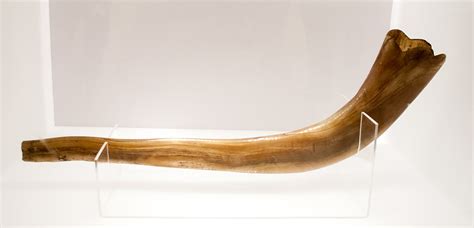
The imagery of return is with us in the structure of the shofar service that the students just led with me. Rabbi Isaiah Horowitz, a 17th-century European sage, noted that there is a pattern of departure and return in the order of the shofar calls: tekiyah, shevarim, t’ruah, and back to tekiyah, like a baseball player taking off from home plate, and then returning to the same place having accomplished something. In Horowitz’s framework, the first tekiyah represents us when we feel whole and sure of ourselves. Shevarim, the slightly elongated broken sound, shows us the cracks just beneath the surface, the places where we are not quite aligned, or have done things we regret. Going deeper still, the t’ruah, those sobbing, shattered calls, show us the parts of us that are truly broken. Horowitz teaches that by coming to terms with the aspects of ourselves represented by the t’ruah call, we can return to the wholeness of tekiyah, stronger for having reckoned with our own brokenness. 

Another way we reflect on departure and return at this time of year is through the words, חַדֵּשׁ יָמֵינוּ כְּקֶדֶם—renew our days, like before. It’s a funny phrase. We want something new, but we want it to be similar to the past. Even when we seek new experiences, we crave the security of being able to recognize them like familiar faces and connect them to our experience. The idea that something can be both new and old is central to our holiday cycle, as we shed the old year’s hard words and cruel deeds and, as I spoke about last night, renew our hopes for the coming year.

We come home to ourselves through these rituals and words, and through the very act of entering this space as a community.

And yet for all this spiritual uplift, there are moments for many of us when, for one reason or another, we don’t quite feel like we belong here, don’t quite feel like all this belongs to us. 

Rebbe Nachman of Bratslav, a Hasidic rabbi who lived in 18th-century Ukraine, was one of our wisest and most sensitive teachers. He told the following story:

One time, a certain man in a certain city dreamed that in the city of Vienna, under a bridge, there was a treasure. He went there and stood by the bridge and asked around as to how to dig there. A soldier came by and said to him, What are you doing standing here and thinking? And he thought that it would be good to tell the soldier his dream so maybe the other man could help him in exchange for a share of the treasure. So he told him.

The soldier answered saying: Oy, stupid Jew! Why do you pay attention to dreams? Couldn’t I dream a dream that there was a treasure underneath the oven in the house of a certain Jew who lives in your home town? Do you really think I’d travel there for a treasure?

The Jew was taken aback and went home to his house. He dug in the kitchen under the oven, and found the treasure. Afterward, he remarked: I had to travel to Vienna in order to know there was a treasure right near me, in my own house

My beloved friends, each one of us is on a journey throughout our lifetimes of going away and coming back and going away and coming back, of searching for a treasure somewhere else, and then finding that it was close by the whole time. Finding that treasure isn’t easy, and making sense of it isn’t either. I can imagine the man in our story digging underneath the oven to find the treasure and then needing to figure out how to put his kitchen back together. Teshuvah is not neat and tidy. 

My own story is full of those zigzags, from the first time I got sent to the principal’s office in religious school because, having started in 5th grade, I didn’t know what was going on and didn’t understand why I was there. The zigzags continued for decades: from refusing to schedule a Bat Mitzvah and dropping out of religious school, to putting off rabbinical school for some years because I thought it was too late for me to learn and I’d have to be alienated forever. 

But the beauty of our tradition of תשובה is that we have a whole entire framework for coming back. There will always be aspects of Jewish tradition that feel uncomfortable—I’ve got a couple myself—but תשובה invites us back and encourages us to find our way. The root letters of the word תשובה—shin vav bet—speak of return, but they are close cousins of another root word, yud shin bet meaning, to stay. Teshuvah is not only an invitation to come back, but to stay, to settle in and explore.

To be Jewish is to wrestle with God, and sometimes with ourselves. It’s there in the word ישראל—God-wrestler. Our tradition expects us: to interpret the text, to ask hard questions, to argue with God. Digging up the kitchen is bound to kick up some dust.

So for folks who are counting the pages till the end of the service, or squirming in your seats, or wondering just who is this God that keeps accounts with such coldness, what I want most to say to you is: you belong here. All this

the long, confusing services, 
the ambiguous teachings, 
the endless details and variations,
the arguments and the counter-arguments,
the words with multiple meanings,
the melodies that float around in your head for days and weeks, 
the shofar and the honey cake, 
the grownups who pat your head and tell you how tall you’ve gotten, 
the children who make you think—sometimes too much,
the soft heart and the sharp points,
the community that loves you—

All of it. This is your treasure. 

Welcome home. Shanah tovah.

Erev Rosh Hashanah 5786 | 2025

(Delivered September 22, 2025)

Some years back, I went through a big six-word story phase. For a self-professed haiku enthusiast and general word freak, this was the obvious next step! The six-word story demands that the writer have a clear expressive goal and the courage to trim everything that doesn’t point toward the goal… and then trim some more. Some of my attempts include: 

Two sweet boys. One sweet life.

Read books, write words, eat popcorn.

Awkward young nerds can become rabbis.

There’s something about a short story.

But seriously, there is. Sometimes the discipline of having parameters like 5-7-5 for haiku or using only six words to make your point reveals some greater truth. So it is for me with this phrase from our machzor:  

תִּכְלֶה שָׁנָה וְקִלְלוֹתֶיהָ וְתָּחֵל שָׁנָה וּבִרְכוֹתֶיהָ
An old year with its curses ends; a new year with its blessings begins.
Or to attempt to put it in six words:
Cursed year ends; blessed year begins.

There are so many ways in which the year just ending feels accursed. We’re living in a time of mounting dread: here, in Israel, and around the world. Dark forces are gathering, hard realities closing in. From a regime that governs by chaos and intimidation, to an ever-fracturing public discourse in which the toxic fringes drown out reasonable voices, to a widening crisis in Israel, to a disturbing uptick in antisemitic words and deeds, to devastating climate events, to school shootings, to drug overdoses, to political violence… It’s demoralizing even to list all these, much less to live them. Day by day, it seems the world threatens to boil over, with rage, dehumanization, and cruelty.

Amidst all this, something drew each of us here tonight. We come back to our tradition day after day, week after week, year after year. We come into the synagogue looking for connection, for spiritual uplift, for community, for emotional catharsis. Threaded through each of these, and many others I could have named, is hope. Even in a world beset by so many problems, in a time when it’s all too tempting to despair about humanity, we—as a community and as a people—are called to find some semblance of hope.

As we begin this new year, I want us to be able to approach it with hope. 

I don’t mean to paint too rosy a picture. Hope isn’t some namby-pamby, fake cheer. It’s not the practice of telling ourselves lies, convincing ourselves that everything is going to be perfect in some future time. Rather, to paraphrase Rabbi Shai Held, hope allows us to muster the energy to remind ourselves that we are OK enough for now. 

Recently, I came across a passage from the book Hope Amidst Conflict by the political psychologist Oded Leshem of Hebrew University in Jerusalem. In the excerpt, Leshem writes of disentangling the connection between our desires and our expectations, in a move toward what he calls optimal hope. In extreme conditions, it’s wise to, as he puts it, “decrease our expectations but keep our hopes propelled by our desires.” In other words, optimal hope is balanced between realism and yearning. When we want something but are realistic and clear-eyed about how likely or unlikely it is to come to pass, we approach Leshem’s intricate calculus of desire and expectation. Putting optimal hope into practice would mean, for example, engaging in activism out of conviction and integrity, rather than out of an exaggerated notion of how much influence we have on the wider world. It would mean parenting with deep feeling, but without attachment to the fantasy that our children will turn out to be violin prodigies and math geniuses with the athletic skills of LeBron James and the patience of the Dalai Lama. Even though, theoretically, some of them might.

Despite or perhaps because of the pattern of catastrophe and recovery that permeates Jewish history, our ancient tradition places a huge emphasis on hope. We see it in the way Torah pushes ever forward in the face of daunting obstacles. Take Moses, who suffers grievously throughout his life. He is deprived of the chance to be a child in his own family, and after being reconnected to his people as an adult, loses numerous close relatives, including his nephews, Nadav and Avihu, and his siblings, Aaron and Miriam. And he is ultimately denied the chance to see his life’s work fulfilled by crossing over into the Promised Land. Yet even Moses finishes with hope for his people. As he prepares to send the Israelites ahead without him, he says in Deuteronomy 31:8:

וַיי הוּא  הַהֹלֵךְ לְפָנֶיךָ הוּא יִהְיֶה עִמָּךְ לֹא יַרְפְּךָ וְלֹא יַעַזְבֶךָּ לֹא תִירָא וְלֹא תֵחָת׃
God will go before you and will be with you.
God will not abandon or forsake you. Do not be afraid, and do not panic.

Even as Moses agonizingly steps back, his thoughts and good wishes are with his people, carrying them forward, without him.

There are hints of hope amidst despair tucked in throughout our sacred texts—in our daily prayers, and in words that get pride of place at this time of year in particular. For example, the final two verses of the psalm for the season, Psalm 27, point tentatively toward hope. Verse 13 reads:

לוּלֵא הֶאֱמַנְתִּי לִרְאוֹת בְּטוּב־יי בְּאֶרֶץ חַיִּים
If only I could believe in seeing God’s goodness in the land of the living…  

The verse trails off as doubt and skepticism loom. Then the next verse, the final one of the psalm, answers:

קַוֵּה אֶל־יי חֲזַק וְיַאֲמֵץ לִבֶּךָ וְקַוֵּה אֶל־יי
Hope toward God! Be strong and courageous of heart,
and hope toward God.                      

This final couplet finds the Psalmist in a crisis of faith, wondering if he can actually believe the things he’s been saying—and then pulling himself toward hope and wholeness. The doubt peeks through in the phrase קַוֵּה אֶל־יי—hope toward God; it’s not a direct hit, but rather a fumbling in the general vicinity of the Divine. As in Leshem’s concept of optimal hope, the Psalmist acknowledges his desire for closeness with God while admitting that it is not a guarantee. This is optimal hope. Grownup hope. 

The Akeidah, the story of the Binding of Isaac, which we’ll read on the second day of Rosh haShanah, offers a stunning hint at hope. In a moment of moral compromise and panic, when it seems even God has turned away, as Abraham is poised with the knife over his son’s neck, there appears, just in the nick of time, a ram in the thicket. The Mishnah teaches that this ram was there all along, since the earliest days of creation. At the moment when it could all go irreparably wrong, Abraham sees the ram, a new possibility, and he narrowly avoids making the mistake of a lifetime. Even when it seems that all is lost, the narrative somehow pulls us back from the brink. 

For my part, when the brink feels perilously close, I often look for guidance from the Piasceczner Rebbe, who served as Rabbi of the Warsaw Ghetto during the Holocaust. The Piasceczner Rebbe endured unimaginable oppression over an extended period of time, and yet managed to scrape together some crumbs of hope to help his community manage the day-to-day existential threats they faced. He walked the tightrope between desire and expectation, even as the dangers grew more and more acute.

In his Rosh Hashanah sermon from 1940, he included a parable of a man so distraught he burst out in wailing and tears. The man called out so loudly that his father ran to him and tried to comfort him. But because he was so wrapped up in his own anguish, the man couldn’t recognize his father or accept the comfort being offered. Imagine the solace he could have experienced, had he been able to perceive his father reaching out to help. This wouldn’t have reduced the ultimate cause of his distress, but at least he would not have been holding it alone. The Piasceczner’s teaching is profound, for his time and perhaps for our own: as individuals, we have very little power to alter or even mitigate the distressing circumstances swirling around us. But allowing ourselves to accept care—both human and divine—softens the heartbreak that threatens to overwhelm. And coming to the side of those who are suffering gives us a sense of purpose. That the Piasceczner could find inspiration to serve, week after week, in perhaps the most hopeless time our people has known, should itself be a source of hope.

In fact it’s due to an incredible act of hope that we even have his writings. During the Holocaust, in the Warsaw Ghetto, a historian by the name of Emanuel Ringelblum collected the everyday artifacts of Jewish life, in the hopes (that word again!) of preserving what could be preserved. Among the things he collected were the Piasceczner Rebbe’s writings, which were packed up into milk cans and buried underground, to be dug up later, after the war’s end. The miracle is that in a time of unrelenting misery, when the worst of humanity was on gruesome display, there were people—the Piasceczner Rebbe, Ringelblum, and others whose names we will probably never know—who saw that even though so many individuals would not survive; Jewish theology, culture, and thought were worth saving. Could be saved. The unimaginable future would someday come. In the words of the Chinese poet Lin Yutang: Hope is like a road in the country; there was never a road, but when many people walk on it, the road comes into existence.

The Hebrew language invites us to reflect on just how fragile hope can be. The word for hope תקווה also means… cord or thread. Sometimes, hope is as robust as a strong cable, a lifeline; sometimes it’s as thin as a thread we can barely see. But threads can be spun together, becoming strengthened over time. Threads can weave in and out of fabrics to reinforce and beautify them. You tie a knot in a thread and have an anchor for your work. Sometimes a thread is all you need to keep the story going.

A thread, like a six-word story, can hold our place and pull us forward.

Cursed year ends; blessed year begins.

Threads of hope bind us together.

Shanah tovah.

Sukkot for TAA

(Delivered October 17, 2024)

Four days later, we choose exile. 

I wrote those words twelve years ago, as I tried to map the arc of the fall chaggim in relationship to the narrative arc of Jewish history. On Rosh Hashanah the world is created, and our story begins. On Yom Kippur we fall spectacularly from grace as if from Gan Eden itself. We reckon with our human frailties and weaknesses, with the ways we will never quite be good enough. And we find ourselves, four days later, fully invested in the impermanence of life. 

The book of Kohelet accompanies us through these seven days of embracing the elements. Where Yom Kippur liturgy reminded us that human life is brief, vanishing like a curl of smoke when the wind blows hard enough; by the time we get to Sukkot, we say, OK let the wind blow. We’ll build some walls, the best we can, we’ll invite friends and strangers into our flimsy shelters. We’ll eat and we’ll drink and we’ll sing, we’ll peek at the full moon between the branches. 

That curl of smoke from Unetaneh Tokef? By the time Sukkot rolls around, we’ve almost made peace with it. 

הֲבֵל הֲבָלִים אָמַר קֹהֶלֶת הֲבֵל הֲבָלִים הַכֹּל הָבֶל׃

Total vanity, Kohelet says. Total vanity. Everything is vanity.

This year feels vainer than most, this year it feels at times as if a whole world is vanishing with that curl of smoke. Will we ever recover a sense of safety and wholeness? Or will the simmering rage and violence boil over yet again?

הַכֹּל הָבֶל

It’s all temporary, and will vanish like a fever dream. 

Meanwhile, here we are.

Sukkot tells us that the meanwhile is the point. Zman simchateinu—the time of our joy. We are commanded to rejoice for seven days before God. Today we are here together. We won’t wait until life is perfect and calm and orderly again before we rejoice. Today is the day. As we sang in Hallel: 

זֶה־הַיּוֹם עָשָׂה יי נָגִילָה וְנִשְׂמְחָה בוֹ

This is the day God has made: let’s rejoice and be glad in it.

This day today. This is the one we have. As long as we have voices to sing with, minds to think with. As long as we have each other, we will find the joy lurking in the marrow of the hardest moments. 

Elsewhere, Kohelet teaches, famously, that there is a time for everything: a time for birth, a time for death, a time for planting, a time for uprooting. A time for killing and a time for healing. A philosopher-king in a melancholy mood, Kohelet says: whatever you see or think or feel right now, wait. It will change. It always does. Investing yourself in keeping everything the same is a fools’ strategy.

In the words of the great Israeli poet Yehudah Amichai: 

A man doesn’t have time in his life
to have time for everything.
He doesn’t have seasons enough to have
a season for every purpose. Ecclesiastes
Was wrong about that.

A man needs to love and to hate at the same moment,
to laugh and cry with the same eyes,
with the same hands to throw stones and to gather them,
to make love in war and war in love.
And to hate and forgive and remember and forget,
to arrange and confuse, to eat and to digest
what history
takes years and years to do.

A man doesn’t have time.
When he loses he seeks, when he finds
he forgets, when he forgets he loves, when he loves
he begins to forget.

And his soul is seasoned, his soul
is very professional.
Only his body remains forever
an amateur. It tries and it misses,
gets muddled, doesn’t learn a thing,
drunk and blind in its pleasures
and its pains.

He will die as figs die in autumn,
Shriveled and full of himself and sweet,
the leaves growing dry on the ground,
the bare branches pointing to the place
where there’s time for everything.

I often say—and I’ve probably said it more often this year than in every prior year combined—that our joy is our secret weapon. As Jews, we live in a state of paradox. It’s not for nothing that some of our happiest songs are in minor keys. Our story is one of constant persecution, anxiety, and isolation. Also our story is one of incredible growth and triumph, punctuated by occasional catastrophe. Both of these are true. Life has never been unambiguously easy for us, and when the short view looks terrible, we look toward the long view. Every time we say the Amidah, we are locating ourselves in a line that goes all the way back to Abraham. If the God of Abraham came through for him, we may yet find our way through the current catastrophe.

On Sukkot, we grab hold of what remains and say, yes it’s awful, but let’s go outside and feel the sharp wind on our faces. We’re alive and that is all there is right now.

Yom Kippur Sermon for TAA

(Delivered October 12, 2024)

Shabbat shalom! Shanah tovah!

In one of my previous incarnations, I worked as a singer and actor, and as such, I became deeply devoted to the TV show, “Inside the Actor’s Studio.” On the show, host James Lipton would interview high-profile actors about their approach to the craft, citing examples from their work and talking about how they built this or that character. The conversations were individual to whichever actor was in the hot seat, but each episode ended the same way, with Lipton giving his guest a questionnaire consisting of, I don’t know, seven or eight questions—what sound or noise do you love? What is your favorite word? Your least favorite word? And so on. Lipton’s final question was the most intriguing: If Heaven exists, what would you like to hear God say when you arrive at the Pearly Gates?

Admittedly, the Christian image of the pearly gates might not resonate. But even if we don’t relate to the mental picture, we can surely relate to the question: If we had a chance to meet God panim el panim—face to face—what might we wish for God to say to us? What would we like to learn is God’s essence, God’s true nature, God’s message for us?

In my days of watching Inside the Actor’s Studio religiously, I was not in the habit of thinking about God, much less imagining a personal meeting. But also, in those days, my sense of God’s nature was fairly one-dimensional, a very conventional one in our culture: I pictured an old white guy with a long beard and billowy robes, either sitting on a throne or floating around on a cloud. This image in my head was informed by children’s books and the occasional New Yorker cartoon, and had so little to do with my actual experience as to be laughable. Although I was an adult by then, my idea of God hadn’t really changed since I was about six. 

Over the ensuing decade or so, I guess I got a system upgrade when it comes to how I think about God. And so, with more trepidation than you might think, I’d like to use this time to talk about God. I figure since I’ve already talked about Israel and Gaza, I might as well take a real risk. But all kidding aside, if your rabbi doesn’t take God seriously, who will? 

The image called up by James Lipton’s “pearly gates” question is in tension with today’s Torah and Haftarah readings, and with the depth and breadth of the universe of Jewish thought. So let’s look at the readings first. 

This morning, in Parashat Acharei Mot, we meet a rather forbidding God, a God who, after the sudden and unexplained deaths of Nadav and Avihu, seems to return to business as usual, giving instruction about the proper way to approach the Beit haMikdash (the ancient Temple). This leads into a fairly detailed imagining of the Kohen Gadol, the High Priest, encountering God—not in the heavens, but rather in the earthly realm, in the innermost chamber of the Beit haMikdash, the Holy of Holies. In this moment of solitude and heightened occasion, with the weight of the community and its sins on his back, the Kohen Gadol will have a fleeting encounter with the presence of God. And because he will be entirely alone—he being the only human with this security clearance—we are left on the outside to wonder what it might be like. This exclusivity is in sharp contrast to the Haftarah, in which we read: 

דְּרָכָיו רָאִיתִי וְאֶרְפָּאֵהוּ וְאַנְחֵהוּ וַאֲשַׁלֵּם נִחֻמִים לוֹ וְלַאֲבֵלָיו׃

בּוֹרֵא נִיב שְׂפָתָיִם שָׁלוֹם  שָׁלוֹם לָרָחוֹק וְלַקָּרוֹב אָמַר יי וּרְפָאתִיו׃

I have seen their ways, and will heal them: I will guide them, 

and comfort the mourners among them. 

Create consoling words, bring peace, peace to far and near,
and heal them, says Adonai.

The Haftarah’s God is a God who sees human imperfection with compassion. In contrast to the Torah reading, we find here a God who is present with the people, a God who heals and consoles, a God who makes a particular point of offering peace and consolation to those who need it. Rashi doubles down on this more accessible God, saying that the “near and far” refers to those who are accustomed to the ways of Torah and to those who are either new to it or have fallen away and returned. Importantly, by Rashi’s estimation, שְׁנֵיהֶם שָוִין—the far and the near are equal. 

The mincha Torah reading this afternoon will add another layer to consider, with instructions for holiness punctuated by the repeating refrain of אֲנִי יי אֱלֹהֵיכֶם—I am Adonai, your God. Be holy, because I am holy, and here’s how. The mincha Torah reading lays out standards for behavior that, if followed, allow for us to become more like God. By honoring parents, rejecting idolatry, cherishing the dignity of the economically needy, treating all with integrity, including speaking up rather than letting resentments fester, we are emulating God. The face of God that emerges from this description is one of high ethical and moral standards. 

Our final scriptural reading of the day, the Haftarah for mincha, is the Book of Jonah. There we find a God who performs an improbable rescue, redeeming Jonah from the belly of a huge fish. Of course, Jonah is in there in the first place because he runs away from God’s instruction to serve as a prophet, so God decides to teach him a lesson. The teaching doesn’t stop there. When, later, Jonah is angry with God for accepting the teshuvah of the citizens of Nineveh and therefore not destroying them, God gives Jonah a profound teaching in empathy. So now to the images of God as stern rule-giver, or as comforter of mourners, or as moral exemplar, we add the idea of God as teacher.

Expanding our vision beyond today’s readings to the biblical corpus as a whole, we discover seemingly endless dimensions of—and metaphors for—the nature of God. In Psalm 146 God is One who

עֹשֶׂה מִשְׁפָּט  לָעֲשׁוּקִים נֹתֵן לֶחֶם לָרְעֵבִים [יי] מַתִּיר אֲסוּרִים

יי] פֹּקֵחַ עִוְרִים [יי] זֹקֵף כְּפוּפִים [יי] אֹהֵב צַדִּיקִים]

Brings justice to the oppressed, gives bread to the hungry,
frees the captive, restores sight to the blind,
lifts those who are stooped over,
and loves the righteous.

Then again, God is also creator of the natural world, as we’ll read in the opening chapters of Breishit in a couple of weeks. Many of us, unlike the Kohen Gadol, find God’s abiding presence in the woods, by the ocean, or surrounded by living beings.

God as bringer of justice, feeder of the hungry, healer of life’s wounds, author of creation… These hopeful images work well when things are going well. But I have to admit they are a tough sell in this moment of deepening crisis in the Jewish world. When Israel is under attack from multiple fronts, when many both in Israel and the diaspora worry that the current leadership has lost its moral footing, when antisemitic rhetoric becomes less and less unacceptable, when the world feels perilous for us, the notion of God coming to the rescue can be eclipsed by the sense of הֶסְתֶר פָּנִים—that God’s face is hidden. A concept rooted in a verse from Parshat Vayelech, הֶסְתֶר פָּנִים has become a way to talk about those historical periods when God seemed absent from the scene, a way of addressing the question of how God could allow great tragedy or unbearable pain in a world which is supposedly suffused with God’s glory.

This past Monday was the secular anniversary of the barbaric October 7th Hamas attack on Israel. Seeing photos of the destruction, hearing survivor stories, remembering the hostages who were killed and those who may yet be alive but are surely suffering, it’s all too easy to wonder, where is God in all this? Where do we turn when catastrophe is suddenly plausible?

For this, we need to resort to the long view, the eternal nature of God that we encounter in daily prayer when we say:

אַתָּה הוּא עַד שֶׁלֹּא נִבְרָא הָעוֹלָם 

אַתָּה הוּא מִשֶּׁנִּבְרָא הָעוֹלָם 

אַתָּה הוּא בָּעוֹלָם הַזֶּה 

וְאַתָּה הוּא לָעוֹלָם הַבָּא

It was You before the world was created
It is You who created the world
It is You in this world
And it will be You in the world to come

Let me repeat that in all its gorgeousness: 

It was You before the world was created
It is You who created the world
It is You in this world
And it will be You in the world to come

This beautiful verse locates the unity of God, and God’s enduring nature, in the ever unfolding universe, in the passage of time. As we learned from the Sfat Emet last night, the unity of God encompasses that which appears good and that which is not yet assimilated into goodness. Even the ashes of the burnt offering—an image that may make us shudder a bit—might unlock something good in the future. The world and its goodness are ever unfolding.

This is not an easy metaphor to get close to; we may long for a less abstract sense of God, for a God who is right here by our side. And the idea that horrific tragedy might someday give rise to something better runs the risk of sounding like justification. I know I’m treading dangerously close to “everything happens for a reason” territory, and I want to be clear that’s not what I mean. But things are happening all the time, and the happening itself is an aspect of God, and what it will come to mean is often still being revealed and created.

To have a non-corporeal, singular, unfolding God means that sometimes God seems hidden or distant. Think about a folded piece of paper. As it unfolds, different shapes manifest themselves. Edges and planes move away as a natural part of that process; geometry demands it. That moving away can really sting. But inevitably things change and change again. Time does its magic. The unfolding continues.

And as this beautiful, terrible, mysterious world unfolds, we can find our connection to the divine in so many ways: in nature, in the riches of our tradition, and in one another. To paraphrase the Sefer Hasidim, a 19th-century halachic work by Yehuda HeHasid: “Two people carrying a load would not be able to carry it as well separately, as together. Two people raising their voices are more apt to be heard than if they cry separately.” If each and every one of us is created בְּצֶלֶם אֱלֹהִים—in the image of God—then every encounter with another person has the potential for holiness, for the experience of God’s presence. Singing together, praying together, laughing, crying, talking about things that matter, or simply being together in companionable silence can all draw us closer to the divine, and draw the divine closer to us. I think of the last words of Rabbi Tzvi Hirsh of Liska, as reported by his grandson Rabbi Zev Wolf. As he lay on his deathbed, surrounded by several generations of his beloved family, Tzvi Hirsh, the Lisker Rebbe, said: “My children, if you cling to God, it will be good for you.” My dear community, may it be good for you, and may you find the face of God that can hold you close and that you can hold close in these trying times. 

G’mar tov and shanah tovah!

Kol Nidrei Sermon for TAA

(Delivered October 11, 2024)

Shabbat shalom & Shanah Tovah!

A saying in the recovery community that has jumped the tracks to mainstream usage holds that doing the same thing over and over again, and expecting different results, is the definition of insanity. Turns out it’s also an uncomfortably accurate description of how we humans sometimes approach the process of teshuvah. Maybe it’s different for you, but every year around this time, I settle in and focus on what went wrong in the past year and what I hope to improve in myself. I talk to the people in my life that I think I may have hurt and ask to make peace. I resolve to be more patient, more thoughtful, more generous. I plan all the ways I’m going to contribute to my communities: the meals I’ll deliver, the people I’ll call, the donations to worthy causes I will make. I imagine myself a year from now, glowing with the shine of authentic virtue. And then, even so, somehow my humanity gets the better of me every single year. 

I first started to realize this while doing a family Tashlich several years ago, when Akiva and Gideon were little. Bill and I scouted out a place in Newton near a body of water, packed some snacks, got everyone dressed and into the car, and headed over. After a short walk, we found ourselves in a clearing in the woods and talked earnestly about what we wanted to throw away from the past year and what we wanted to do better. What struck me—with both hope and rue—was how much our comments resembled those of years past. The things we wanted less of in the new year—arguing, thoughtlessness, impatience, meanness—were exactly the things we had wanted less of in the year just ended. Did we really do such a bad job of it the last time (and the time before and the time before the time before) that we’d have to work on the same things yet again this year? It’s discouraging to name the same errors year after year, to set the same intentions as the year before and know that we’re likely to be setting (or re-setting) them—same time, next year.

But our wise liturgy already knows this about us. Kol Nidrei is literally a legal formula that admits to failure before we’ve even started. It says, essentially, we have the noblest of ambitions and incredibly good intentions. But we don’t really have such high hopes that we’ll fulfill them. In fact, our expectations are so muted that we’re saying out loud—three times—that we are going to do our best but we already know we’re going to miss. 

Because missing is what humans do. 

In tomorrow morning’s Torah reading, we’ll hear about the origins of Yom Kippur: the High Priest’s ritual for taking on and discharging the whole community’s errors. We’ll hear about his sacrificing animals, about his sending off a goat invested with all the sins of the Israelite people, about his entering the Holy of Holies to encounter God and make atonement on behalf of his community. And the final move we’ll hear about is the commandment to do it again every year, for all time. From the beginning, teshuvah was destined to bear repeating. It’s a feature, not a bug.

If you’re feeling cynical, you might start to think: Teshuvah doesn’t work! So why do we do it?!

After the realization I just mentioned, I wondered the same thing. A lot. What is the point of all this self-reflection, all this redirection, all this apologizing? Where’s the payoff if I still have to do it next year, sometimes with the same people, and about the same issues? 

Little by little, I’m coming to see that when it comes to teshuvah, process and results are both important—and in fact, process has its own unique value. It’s the process of heshbon ha-nefesh, literally the accounting of our souls, that helps us improve. That is to say, while the things we resolve to do differently may or may not come to fruition exactly as we imagine them, the process of soul-searching wears away at our inner defenses in a way that helps us grow. Widening our perspective to truly understand how something we have said or done was harmful helps us grow. Finding the humility to offer a sincere apology helps us grow. Like so much in our tradition, it’s not about instant results but rather about the long game. Even though we may never fully overcome our worst instincts, even though we won’t completely stop making mistakes, this process of working towards teshuvah offers the possibility that in the future we can, at least, make different or softer mistakes, and perhaps move sooner and more devotedly toward making amends when we do.

Despite our best and most earnest wishes, and our most focused efforts at teshuvah, the existence and structure of Yom Kippur remind us that it’s part of being human to need regular reminders and scaffolding for the process of resetting our moral compasses. Rav Avraham Yitzhak Kook, who lived in the late nineteenth and early twentieth centuries, located teshuvah at the core of creation: just as the purpose of creation is its ongoing striving to return to the perfection of Gan Eden, so too the human work of teshuvah is seen as an ongoing, ever spiraling endeavor. It is, like each of us, always in the process of becoming. 

Or perhaps even in the process of being. I sometimes liken the inner work of Yom Kippur to that moment in meditation when you realize your mind has gone away, and you simply bring it back. That moment of homecoming doesn’t mean you’ve “achieved” meditation and can wash your hands of it. And the moments of monkey-mind don’t mean you stink at meditation and shouldn’t even bother. Rather that moment of return means simply, for that moment, you’ve come home to yourself. You’ve exercised the muscle of return. And every time you exercise that muscle, it… gets a little more exercise. 

In his teaching about Parshat Tzav, the late nineteenth century Hasidic master known as the Sfat Emet, spins out a beautiful metaphor for the ashes that remain after the completion of the korban olah—the burnt offering. In the Sfat Emet’s rendering, the final mitzvah of that offering is תְּרומָת הַדֶשֶן—elevating the ashes. Rather than being a mere cleanup operation, removing the residue of the ashes becomes a way of lifting up to God even the parts of ourselves that we might imagine have no value: the hard edges, the self-involvement, the dark thoughts. But in the Sfat Emet’s words:

הֲרֵי הַכֹּל בִּכְלָל בְּרִיאַת השי”ת

See, all of this is included in the creation of the Holy Blessed One

Every aspect of us, like every aspect of the world, is part of the work of creation, and as such has intrinsic value. Even those things that appear to be, in my teacher Nehemia Polen’s phrase, unassimilable into goodness, are part of the divine labor and have the potential for transformation and renewal. The dark sides of human nature—those things we wrestle with each year as we do teshuvah—are also reflections of God, waiting to be uplifted and made whole. This is the work of teshuvah, and it is more urgent than ever. The ashes of our lives, this is what we confront every year at this time. Lifting up the parts of ourselves that we wish were different and the actions we’ve taken—that we wish we hadn’t—is a way of acknowledging our humanity, God’s divinity, and the holy power of trying again. 

So while I wish I could promise you that I will always be nice to my spouse and patient with my children and attentive to my parents, while I wish I could tell you that I will give tzedakah as often as the thought arises in my mind and tend to the planet as much as it deserves, past years and my own humanity suggest that I will try and fail and try again. We can’t erase our past mistakes and walk away as if they never happened, and we can’t look at our future mistakes with a casual “oops, oh well” and move on. Instead we keep the mistakes for learning, like the Israelites kept the broken tablets in the Ark along with the new ones. Both the shards and the unbroken tablets remind us what we’re capable of—the countless and even terrible mistakes we will continue to make, and the repair for which we will continue to reach. Over the course of this challenging day of reflection, self-denial, and soul-searching—let’s come back to ourselves. And let’s support each other, as we attend to the ways that our ever-broken lives are dreaming of wholeness and holiness.

Gmar tov and shanah tovah!

Rosh Hashanah Sermon for TAA

(Delivered October 3, 2024)

“How are you?” 

“How are you?” 

“Rav Naomi, so good to see you, how are you?”

How are you, how are you, how are you, how are you? […]

I never thought I would dread a question more. 

How am I? 

Exhausted. Full. Empty. 

It’s complicated

For the last almost-year, the world has felt both amazing and terrible. On the amazing side, I have rejoiced at so many things: watching my children grow beautifully into their own interests and pursuits, my own learning at Hebrew College, and of course being swept up into a job process that landed me literally in paradise. 

Yet meanwhile, there has been deep suffering both communally and globally. Our congregation has suffered many losses, including several in the past week. Each of us carries our own private griefs, some of them very fresh. And of course, over the past year, the Jewish world has faced unspeakable violence, terror, antisemitism, confusion, and moral injury. The heartless attacks on October 7, 2023—last year at Simchat Torah—have opened up a wound in the Jewish soul, and the months of war and conflict that followed have poured bleach into that wound on a daily basis. The unfolding catastrophe in Israel, Gaza, the West Bank, and now Lebanon holds horrors and traumas that are hard to fathom.

Once the initial period of rawness after October 7 subsided, and for most of the past year—actually for many years—I have resolutely preached, and practiced, Jewish resilience. Like many of my friends and colleagues, the basic plan is this: do the work, meet the obligations, take care of business, do the needful. Just keep going. I often say that we Jews have a practice of moving forward, even with tears in our eyes. 

I am starting to see the limits of this strategy. In one of the saddest years in memory for my generation of Jews, my tears seem to have gone underground. I hold my grief—about the October 7 attack and the horrific war that is unfolding in its wake, about the explosion of antisemitism and other hatreds, about the way my sons’ high school and college years have been colored first by a global pandemic and now by a global political crisis that places our people at the center of some heartbreaking dynamics […]—all this grief I keep somehow at arm’s length, titrating it so as to prevent it from taking over every corner of my life. Although it’s with me constantly, it’s always a bridesmaid, never a bride. Even when I allow myself to be on the verge of tears, both the enormity of the circumstances and the urgency of the next deadline keep it in check. All this moving forward might be more like running in circles than I realized. 

When it comes to expressing our heartbreak, many Jewish texts, including those we heard chanted today, point us in a different direction. Both our Torah and our Haftarah readings show us women—in particular—in the grip of deep, uncontainable emotion. Where heartbreak can sometimes leave us in a defensive crouch, protecting ourselves from our own depth of feeling, for Hagar and Chana both, that depth of feeling simply is. They don’t shy away from it or control it. When stranded in the wilderness and faced with what seems like the imminent death of Ishmael, her only child, Hagar lays down his weary, dehydrated little body and goes a distance away: 

וַתִּשָּׂא אֶת־קֹלָהּ וַתֵּבְךְּ

And she lifted up her voice and wept

In this remote environment, having finished the bread and water Avraham supplied them with, no other tools at her disposal to help her son survive, she has nothing left but her tears.

Then, in the Haftarah, childless Chana, wounded by her sister-wife Penina’s cruel gloating, goes to the Temple to pour out her sorrow and frustration about her infertility. 

וְהִיא מָרַת נָפֶשׁ וַתִּתְפַּלֵּל עַל־יי וּבָכֹה תִבְכֶּה

And her soul was embittered, and she prayed to God and she wept

This repetitive grammatical form “vacho-tivkeh” is used for emphasis, to show the hearer the depth of Chana’s pain, a pain that bursts out in inevitable weeping. Having opened herself to the tears begging to be shed, she moves, as the brilliant Torah scholar Dr. Judith Kates writes, “from that wordless expression of her inner reality to giving eloquent and even daring voice to her needs, desires, and hopes for the future.  … She creates a previously unknown pathway to God.”

The Sages of the rabbinic period regard Chana as a teacher in this way; in her vulnerability and authenticity, she shows us how to pray. The rabbis come to regard the expression of emotion as a pathway to the divine. From Masechet Brachot 32b comes the poignant teaching: 

מִיּוֹם שֶׁחָרַב בֵּית הַמִּקְדָּשׁ נִנְעֲלוּ שַׁעֲרֵי תְּפִלָּה

Since the destruction of the Beit haMikdash—the ancient Temple—
the gates of prayer have been locked

וְאַף עַל פִּי שֶׁשַּׁעֲרֵי תְפִילָּה נִנְעֲלוּ, שַׁעֲרֵי דִמְעָה לֹא נִנְעֲלוּ

But despite the gates of prayer being locked,
the gates of tears remain unlocked

For these devoted scholars and preservers of the tradition, these innovators who lost everything and started again, there were times when praying didn’t feel like enough, but weeping did. Elsewhere in the Talmud—on Bava Batra 15a—there is a tradition that Moses—who arguably was closer to God than any human being—wrote the last few chapters of the Torah not in ink but with his own tears. 

Our society tells us—either explicitly or implicitly—that crying is a sign of weakness. We are taught to keep it under wraps; some of us have learned this lesson so well that we can’t cry even when we want to or need to. Somehow we feel shame either way; whether we’re crying too much or not enough. In either case, the tears seem like an embarrassment. Think how often you see someone making a big speech on a big occasion preface their talk by saying, “I promised myself I wouldn’t cry,” or, “I might cry.” The tendency to announce that we’re going to cry—as if our audience wouldn’t recognize it and might mistake it for sneezing or tap dancing—feels like a way of distancing ourselves at the very moment we are actually getting closer to ourselves. There’s something about a good cry that resets our systems and opens the channel for something new to happen. Think of the toddlers in your life, those people who have no problem bursting into un-self-conscious, full-throated tears. Then, when the storm has passed, they simply move onto the next thing, refreshed and aligned.

Rather than being a sign of weakness, can we instead see crying as a sign of wholeness, or even holiness? For both Hagar and Chana, those moments of deep emotion, of the waters overflowing their banks, are met by divine reassurance, a sense of being caught like a newborn and held when they most need it. 

Which might explain why, on Rosh Hashanah, a day of return, and renewal, and even rebirth, we read these two texts which speak of moments of overwhelming heartache. Something about their pain awakens us to the fullness of life. Rabbi Isaac Luria, known as the Arizal was quoted by one of his students as saying, 

מִי שֶׁאֵין בֶּכִיָּה נוֹפֶלֶת עָלָיו בַּיָּמִים הָאֵלּוּ
הוּא הוֹרָאָה שֶׁאֵין נִשְׁמָתוֹ הֲגוּנָה וּשׁלֵּימָה

A person for whom weeping doesn’t befall them in these days,
it is a sign that their soul is not respectable and complete.

When the moment requires it, when the era requires it, weeping can help us to keep our souls intact. I’m not saying that you have to cry to do this right, but I am saying that there may be a part of your soul that is looking for permission. 

The season of teshuvah—of return—invites us into a space of reflection and soul-searching, asks us to take hold of our selves and find our way back into wholeness. There’s a teaching from Rav Kook, the first Ashkenazi Chief Rabbi of what was then called Palestine, in which he says: It is only through the great truth of returning to oneself that the person and the people, the world and all of existence, will return to their Creator, to be illumined by the light of life. 

A few weeks ago, we read in Parshat Shoftim:

תָּמִים תִּהְיֶה עִם יי אֱלֹהֶיךָ

Be wholesome with Adonai your God

This sense of being fully present with the divine is the reason for our teshuvah, and its goal. Teshuvah is the how; a deeper relationship with God is the why. In this time of deep emotional and moral distress, may we allow ourselves to feel what needs feeling and be renewed by it. May these lines, excerpted from the poem Sadness by Daniel Joel Cohen, fill us with the courage to embrace our tears and let them teach us. He writes:

Tears—please do not wipe them away,
Do not rush for tissues.
We will not melt.
Life is not meant to be dry.

You must step into the waters
Before the sea parts and the way clears.

Insisting on staying on dry land
Will keep you safe
From the miracle.

Courage rewards those who are willing
To feel,
Tenderly,
Together.

Welcomed into the arms of loving presence,
Sadness, this sadness in my being,
Can finally come home.

Shanah tovah!

Erev Rosh Hashanah Sermon for TAA

(Delivered October 2, 2024)

Shanah Tovah! It is so good to be here with you, to be your rabbi, and to begin this new year together as a community. 

A few years back, before I ever could have imagined moving to Gloucester, my family and I spent a week in North Carolina by the beach, visiting with relatives. As everybody in this room knows, ocean has a rhythm all its own and while I’m not the biggest fan of sand, the roll and swell of the ever-changing sea is a source of constant wonder and inspiration.

So during that week in North Carolina, the four of us—me, my husband Bill, and our two sons Akiva & Gideon—spent a day at the beach. We had a great time, jumping the waves, goofing around. The afternoon went by in a golden haze as we just played in the ocean. At a certain point we looked up, and we realized we had drifted a couple of house-widths down the beach. It wasn’t a huge distance—maybe a hundred fifty feet—but none of us had noticed our orientation shifting as it was happening. 

This is the point of teshuvah. Most of us, most of the time, are not slipping that far off course. But we do drift, despite our best intentions, and the reflective nature of Rosh Hashanah invites us to notice and return home to ourselves.

So we come together here, to retune our instruments, remember who we were and who we can be, to reconnect with ourselves and each other. And so here we are, not a minute too soon, facing a moment rich with meaning and possibility, and also with sorrow and worry. 

With war grinding on in Gaza and now boiling over on Israel’s northern border, and Lebanon taking center stage while Gaza remains unresolved; with the missile attack from Iran just two days ago; with a contentious election season unfolding; with hostages still in captivity—not to mention the several losses and illnesses this community has sustained in recent weeks and months—I doubt anyone in this room feels uncomplicatedly upbeat about the world right now. Our Machzor has a one-liner, a kind of floating zinger, that could not possibly be more apt:

תִּכְלֶה שָׁנָה וְקִלְלוֹתֶיהָ תָּחֵל שָׁנָה וּבִרְכוֹתֶיהָ

May the old year and its curses end,
and may the new year and its blessings begin.

I enter this space, and this new year, with deep ambivalence. It is wonderful—really, really, truly wonderful—to be your rabbi and to be embarking on this relationship together. And you have no idea how much I wish we were beginning this new stage of our relationship in a less complicated world, in a world that felt as shiny and optimistic as the words הַיּוֹם הֲרַת עוֹלָם—Today the world was born!—seem to promise. In a world in which that line from the Machzor about the old year and its curses didn’t feel so immediately recognizable. 

Many in the Jewish community are experiencing this time with a sense of near-existential dread. Disaster is not upon us, but it feels more plausible than ever before in my lifetime. Even as reasonable people may—and do—disagree about how we got here or what “the solution” is—any way we look at it, there is more than enough reason to locate ourselves somewhere along the continuum between unsettled and despairing. 

If you came to synagogue tonight hoping that your new rabbi would make sense of the events of the past year and either tell you what to think about the historical swirl unfolding around us or reinforce your already-strong opinion about the historical swirl, I’m afraid I have some disappointing news. I live in a state of near-perpetual uncertainty about המצב—the situation. I have a whole range of contradictory beliefs and opinions. I am devastated and furious at the murderous rampage of October 7th and the ongoing captivity of our hostages. I’m heartbroken at the loss of innocent life in Gaza. I’m ashamed of the settler violence that plagues the West Bank. I’m terrified at this week’s escalation with Lebanon and Iran. What I feel truly certain about is that the whole thing is awful, it’s complex, and it has a history that’s at least several centuries long. A simple answer has never felt further off.

We live in a world often governed by the false assumption that things are all one way: that there is, in any given situation, a good guy and a bad guy, a victim and an oppressor, and that it’s easy to recognize who is playing which part. But, most of the time, that’s not real life. So much depends on where you stand and which way you’re looking. And within this room, there are bound to be folks on the right and on the left and in between. Our tradition doesn’t have a central arbiter of opinions, thank God. Rather, we make it a spiritual practice to listen across difference, and to remain in community regardless. Looking at our sacred rabbinic texts, we see multiple viewpoints represented, disagreements preserved, minority opinions articulated and commented on. We don’t mind the messiness of multivocality, in fact we embrace it. 

What I really want to say to you tonight is that our purpose as a community is not uniformity, but solidarity. Regardless of the ways in which we may differ, our task is to be there for one another, a source of support in times of joy and sorrow and change. The war in Israel and Gaza and now Lebanon is far away but it implicates us all, in the ways that some in the non-Jewish world are perceiving us, and perhaps even in the ways we are seeing ourselves. In some sense, the Jewish people as a whole is at war, and as such, we need one another more than ever. We can’t afford to be fractious. We need gathering places like TAA, where we can be unapologetically Jewish, where we are not tempted to downplay our identities or tuck our Magen David necklaces into our shirts to draw as little attention as possible. We need places where, in the words of Rabbi Menachem Creditor, we don’t have to live in translation.

We find in Bamidbar chapter 23, verse 9 a phrase that has become a kind of watchword for the experience of being a tiny minority that often feels misunderstood and unwelcome in the wider world. 

הֶן־עָם לְבָדָד יִשְׁכֹּן וּבַגּוֹיִם לֹא יִתְחַשָּׁב

Indeed this is a people that dwells apart,
and is not counted among the nations.

This poignant phrase is spoken by Bil’am, who is hired to curse the Israelites but instead winds up blessing us. Something in this outsider’s perception rings true; from his vantage point high above the Israelite camp, he can perceive the individuality that is inherent in our people, as well as the isolation that often comes with that individuality. Bil’am’s words feel so real to me these days. In the months since October 7, and after the fresh wound of the murder of the six hostages, I have been pained by the “split-screen” effect of my social media. While my Jewish friends have been mourning and grieving—albeit in different keys according to their political leanings—my non-Jewish friends have been deeply engaged in living a normal life. Stories of cute kids and hilarious puppies, vacation photos, the occasional gripe about an obnoxious in-law. This is the experience of being a people that dwells apart, uncounted amongst the nations. At times like this, I regard the mainstream regular world with wariness and a sensibility that says we’re here but not totally. 

So where can we feel truly at home? Where do we turn in times of alienation and distress? Synagogue is the easy and expected answer—what else would your rabbi say?— but there’s something to it. I think there’s a way to look at this question through the lens of teshuvah—of return. That is, there’s a way in which we have to labor to create that sense of home. Making a space for teshuvah—for finding our way home—is something we do for one another. Think of Shmot chapter 25, verse 8, where God says:

וְעָשׂוּ לִי מִקְדָּשׁ וְשָׁכַנְתִּי בְּתוֹכָם

Let them make me a sanctuary, and I will dwell amidst them.

Both verses play on the root letters—shin chaf nunto dwell. The Bamidbar verse teaches about how we Jews dwell apart from other peoples; the Shmot verse shows the other side of the coin, about how building something together can awaken the divine presence. In a very real way, when the going gets tough, the Jews get … together. 

Situated in a passage describing God’s instructions for forming the Israelites’ gifts into the mishkan, the traveling structure that will hold the divine presence, the Shmot verse implicates each and every community member in the mission of drawing God’s holy presence into the world. What connects it to teshuvah is that the Hebrew in the second half of the verse is ambiguous. You could translate it as I will dwell amidst them or, I will dwell within them. The spiritual task of returning to our truest selves brings us home to God; the spiritual task of gathering in community brings us home to one another. 

At our best, in community—in this community—these threads are intertwined, braided together like the challot we enjoy at our Shabbat and holiday tables. By investing in one another and the work of sustaining our community, we can bring more kedushah—more holiness—into a world that badly needs it. This is the teshuvah that is calling to me the loudest this year—addressing the ways in which we are feeling alienated and alone through jointly creating a home in which to share our lives together, accessing the divine through deepening our commitments to one another.

2021/5782 Yom Kippur Sermon

Shana tova! Thank you for the pleasure of bringing in the new year with you, and for the honor of offering a few words of Torah today. As I scanned both the landscape and my inner stirrings for what to speak about today, I was struck by just how many threads there are to pull. I could address any number of pressing global issues: the ongoing public health crisis and its economic, mental health, and social aftershocks; the growing outcry for racial and economic justice; the catastrophic weather that practically screams in our ears that climate change is looming closer than any of us feels ready to reckon with; and a society in which the values of freedom and individualism are in mortal conflict with the communal commitment of caring for one another. The world feels like too much to take in, and yet the need to pay attention and take action is more urgent than ever. 

I don’t know about you, but I am exhausted. Don’t misunderstand me; I am happy with my life and I deeply recognize my many blessings. Yet I often find myself wanting to pull the covers over my head because there is just so much turmoil — calamity everywhere I look. 

And then the question comes to me, over and over: What do we do when we feel overwhelmed and caught in the middle, when the forces swirling around us start to feel like drowning? When is it a moment for reflection, and when is it a moment for action? 

Which is it now?

Of course it is now — and always — both. Our texts for this season point us in both directions, toward introspection and discernment and toward the never ending work of tikkun olam

Both reflection and action constitute a kind of presence to the Divine — whether it is presence to the still, small voice that guides us on our way, or presence with the righteous work that still, small voice calls us to. 

I have been reflecting a lot on both types of presence lately. In this historical moment we are more acutely aware than ever of presence and absence. The great blessing of being in the same space as other people is something whose importance many among us hadn’t fully realized until it became a scarce commodity. All those months of missing people or of seeing them only behind a mask or onscreen lent an air of unreality, of watered-down-ness to our relationships. This past year and a half, I think we have come to realize how much our sense of the presence of others is rooted in seeing their faces. In Hebrew, the word פָּנִים neatly encompasses this idea: its definitions include both face and presence. In the inflected form ָלְפָנֶיך heard so often throughout our liturgy, it means, “before you” — literally in your presence and in front of your face.

Psalm 27, which many of us recite daily from the beginning of Elul through the end of Sukkot, offers a rich meditation on the idea of connecting face and presence. Verse 8 reads: 

לְךָ  אָמַר לִבִּי בַּקְּשׁוּ פָנָי — אֶת־פָּנֶיךָ יְהֹוָה אֲבַקֵּשׁ׃

This is a puzzling verse, one which opens up a theological question. A traditional approach to the Biblical Hebrew yields the translation, On Your behalf, my heart says to me, “Seek My face!” and I do seek Your face, o God. The psalmist’s heart advocates on the part of God, imploring for the speaker to seek out the presence of God. The Spanish commentator Ibn Ezra likens the heart to God’s שליח, God’s representative. He sees the heart as a Divine internal compass calling the Psalmist into stillness and searching. However, a more contemporary interpretation of this verse, taking into account modern Hebrew usage, switches the roles around — My heart says to You, “Seek my face!” O God, I seek Your face. In this reading, the Psalmist is asking for God to recognize him, and pledging to do the same. This reciprocal recognition, which posits both God and the Psalmist as seekers, changes the theology, casting the still, small voice as… more of a duet. The next verse continues: אַל־תַּסְתֵּר פָּנֶיךָ מִמֶּנִּי Do not hide your face from me. The stakes are high, located in the fear of not connecting, of all of this searching being met with nothing. Yet the psalmist persists. The last verse reads:

קַוֵּה אֶל־יְהֹוָה חֲזַק וְיַאֲמֵץ לִבֶּךָ וְקַוֵּ֗ה אֶל־יְהֹוָה׃

Hope toward Adonai! Keep your heart strong and courageous, and hope toward Adonai! Regardless of who is doing the seeking, the psalm invites us into quiet reflection and hope, even amidst turmoil, asking us to search for the presence of God and wait. 

Our Haftarah for today, on the other hand, demands that we act. This fiery speech from the prophet Isaiah is full of action words, exhortations, imperatives — Build up a highway! Clear the path! Remove the obstacles! You can practically see Isaiah shaking his fists, trying to get his people to pay attention. Isaiah derides the people who fast in body only, while remaining spiritually unmoved. Such empty ritual strips the fast of its meaning and import. Rather, Isaiah says: “This is the fast I desire: to open the bonds of wickedness, shake off the yoke, let the oppressed go free! Share your bread with the hungry, take the poor into your home, clothe the naked! Do not turn away from your flesh and blood!” He goes on to promise that if our fasting and introspection inspire us to do those things, then the presence of God will be with us.

אָז יִבָּקַע כַּשַּׁחַר אוֹרֶךָ וַאֲרֻכָתְךָ מְהֵרָה תִצְמָח
וְהָלַךְ לְפָנֶיךָ צִדְקֶךָ כְּבוֹד יְהֹוָה יַאַסְפֶךָ

Then your light will burst forth like the dawn, and you will immediately return to flourishing. And your righteousness will walk before you, the presence of God will gather you in.

Where Psalm 27 calls for reflection, Isaiah urges us to press that reflection into service, to take up our sacred task of tikkun olam. The values of stillness and action are not in conflict but rather in dialogue. Our alternate Torah reading for today, from Deuteronomy chapter 29, says: 

הַנִּסְתָּרֹת לַיהֹוָה אֱלֹהֵינוּ
וְהַנִּגְלֹת לָנוּ וּלְבָנֵינוּ עַד־עוֹלָם לַעֲשׂוֹת אֶת־כָּל־דִּבְרֵי הַתּוֹרָה הַזֹּאת

The hidden things are for God, but the revealed things are for us and for our children, to enact all of these teachings into eternity. So, yes, the quiet matters are between us and God — discerning, reflecting, finding our way. But once we’ve found that way, we must stand tall and translate thoughts into deeds.

The activist Sandra Steingraber wrote, “We are all musicians in a great human orchestra, and it is now time to play the Save the World Symphony. You are not required to play a solo, but you are required to know what instrument you hold and play it as well as you can. You are required to find your place in the score. What we love we must protect. That’s what love means. From the right to know and the duty to inquire flows the obligation to act.”

Steingraber’s words are a summons to righteousness, an echo of the principle from Pirkei Avot that we are not required to complete the work but neither are we free to desist from it. Each of us has a role to play, no matter how humble and incomplete. We need simply to find our place, to do something.

My blessing for you this Yom Kippur is for deep, soul-filling reflection that nourishes you toward action, in whatever direction you are called. 

Gmar chatima tova!