Vayigash for TAA

(Delivered January 4, 2025)

Shabbat shalom!

Years ago, before I had children, I used to spend a lot of time hanging around in my local independent bookstore. For those of you familiar with Newton, it was the old Newtonville Books, back when it was actually in Newtonville. It was the kind of place where the booksellers chatted with the customers and so the eavesdropping was usually pretty good.

One winter morning, as I was browsing the shelves, I overheard the store owner shooting the breeze with another customer, a man wearing a woolen ski cap pulled low over his ears. They were talking about the then-recent David Mamet movie State and Main, which I had also seen. Their comments ranged from enthusiastic to rapturous. Truth is, I had a dissenting opinion, but despite the bookstore’s general approval of banter, I didn’t speak up. This might have been a stroke of luck for me. A few moments later, someone else entered the store and joined the conversation. The owner introduced the new person to the man in the woolen hat he’d been talking to. You guessed it: David Mamet.

Mamet has been on my mind ever since I read his op-ed in last Thursday’s Wall Street Journal. In it, he likens the Jews to the world’s foster children: at times flourishing, when in the context of a healthy “family”—and at times abused and persecuted, when not. In either paradigm there is a sense of wariness due to the rupture of having been displaced to begin with. The Jew is likely to, as Mamet puts it, “accept any indignity rather than risk a tenuous momentary acceptance. He has no voice at the kitchen table.” Whether or not one agrees with everything in his essay, I think Mamet’s metaphor of complicated family dynamics raises a good point about the realities of our being a minority in a majority culture. The pressure to assimilate in order to survive is always there, and we all make our choices as to whether and how much to do so. Sadly, history teaches us repeatedly about the limits of assimilation as a survival strategy. 

With this in mind, it’s interesting to look closely at the scene in Parshat Vayigash where Josef’s family joins him in Egypt. Once father and son are reunited, Josef immediately goes into practical mode. He shares his plan to settle his family in Goshen, instructs his brothers on how to introduce themselves, and sets out to go speak with the Pharaoh, bringing a few of the brothers along with him. 

In Chapter 47 Verse 2 we read:

וּמִקְצֵה אֶחָיו לָקַח חֲמִשָּׁה אֲנָשִׁים וַיַּצִּגֵם לִפְנֵי פַרְעֹה׃
He chose five from among his brothers and set them before the Pharaoh.

Many translations interpolate the word carefully, as in he carefully chose five from among his brothers, and indeed Rashi reads this ambiguous pasuk to suggest that Josef purposely chose the brothers who looked the weakest, wanting to make the newcomers appear as non-threatening as possible. Perhaps to reinforce the message that they are mere shepherds as opposed to conquerors, or perhaps to ensure that they would not appear strapping enough to risk being conscripted as soldiers. Whatever the reason may be, it’s clear that as an insider, Josef knows his way around the Pharaoh’s inclinations and is working the system to advantage his long-lost family. Josef, with his Egyptian wife and his high government position, has a foot in two worlds. Although he is not fully Egyptian, he has a voice at the kitchen table, so to say, and he uses it to help his birth family settle in Goshen in order to survive the famine.

Jacob, on the other hand, understands that he is an outsider, and when Josef brings his father to meet the Pharaoh, Jacob knows his place. The Jacob who manipulated his brother and father to serve his own purposes, the Jacob who stood up to Lavan demanding his rightful wages, the Jacob who wrestled with the divine and prevailed—this same Jacob behaves quite differently upon encountering the Pharaoh. In their short first meeting, Jacob only speaks three times. Two of these times are to bless the king, or to genuflect. And in the third, when the Pharaoh asks how old he is, here is his response:

וַיֹּאמֶר יַעֲקֹב אֶל־פַּרְעֹה יְמֵי שְׁנֵי מְגוּרַי שְׁלֹשִׁים וּמְאַת שָׁנָה
מְעַט וְרָעִים הָיוּ יְמֵי שְׁנֵי חַיַּי וְלֹא הִשִּׂיגוּ אֶת־יְמֵי שְׁנֵי חַיֵּי אֲבֹתַי בִּימֵי מְגוּרֵיהֶם׃
And Jacob said to the Pharaoh: the years of my sojourn are 130. The days of my life have been short and difficult, and I have not achieved the lifespan of my ancestors in the days of their sojourns.

When asked a simple question, Jacob responds awkwardly, essentially making apologies for the length and quality of his life. Formerly fiery Jacob, in this unfamiliar context, has become deferential to the point of indignity. He is painfully aware in this conversation that he does not, in Mamet’s metaphor, have a voice at the kitchen table.

As the story continues, the assimilated Josef rises to ever greater status in the Egyptian hierarchy. In my friend Matthew Schultz’s phrase, over and over Josef plays Pharaoh like a harmonica. This works out well for Josef and his brothers, but not so much for the rest of the Egyptian population as Josef amasses all the wealth in Egypt and forces the local residents into servitude. 

And in just a few short weeks, we will see what happens when there arises a Pharaoh who knows not Josef. 

With this episode, I believe the Torah is asking us to think long and hard about assimilation and its limits. Is there such a thing as the right amount of assimilation? Is there a way to be in the minority and not compromise our integrity? Where are we at home, and where are we visitors? In a time when antisemitism is on the upswing, these are not idle questions. In a moment that finds the Jewish people—both within and outside the Land of Israel—increasingly the subject of cynical scrutiny, harsh rhetoric, and sometimes outright violence, what does having a voice at the kitchen table sound like?

I don’t presume to answer for all places and all times, but what I have experienced in my role thus far, as Gloucester’s sole pulpit rabbi, is that knowing when and how to speak up is essential. My experience with the interfaith Thanksgiving service is a case in point. As you might remember, the folks planning the service made sincere efforts to be inclusive, but did so at first without consulting me. The result was a first draft that missed the mark of being authentically interfaith, for a host of innocent reasons. Until I articulated for them why that original service plan was not fully inclusive, they had no way of knowing. I’d even go further, to say they had no reason to know. But once they did, all kinds of doors opened, and relationships amongst the group deepened. A bit of open-hearted education changed the tenor of the discussion and brought the service much closer to the standard we all held for ourselves.

And now, with the flap over the City Council’s antisemitism resolution and concerns about its inclusiveness, the same principles apply. The general public—and even the activists calling for rescinding the original resolution—may have no way of knowing the role antisemitism has played in the sweep of Jewish history. Our task in this moment is to educate: calmly, clearly, and with an approach that takes to heart the teaching from Pirkei Avot Chapter 1, Mishnah 6.

הֱוֵי דָן אֶת כָּל הָאָדָם לְכַף זְכוּת
Judge every person on the side of their merits

I was recently invited to speak with the folks down the street at St John’s Episcopal Church. In the course of the conversation it became clear to me that most of the parishioners there had never thought about antisemitism as a repeating pattern in Jewish history. Tears formed in their eyes as I shared what the world looks and feels like to the Jewish community right now, and the sense of trauma that seems to lurk in every corner. Hearing their sincere offers of allyship and support taught me the value of speaking up, and showed me that between assimilation and isolation there is a middle path.

Building authentic relationships with people of other cultures expands our perspectives and gives us a platform for helping others to see things they don’t even know to look for. This work is more important than ever in this complicated and scary time. 

Ultimately it is not the Jews’ job to solve the problem of antisemitism, any more than it’s the responsibility of the Black community to end racism. We can, however, play a role in educating others. With trust, good will, and thoughtful communication, we can—and must—fortify our relationships in this community. 

May we go from strength to strength, and from isolation to integration. And over time, with gentle candor and open hearts, may we build up our courage to find our collective voice at the kitchen table.

Shabbat shalom!

Vayetze for TAA

(Delivered on December 7, 2024)

Shabbat shalom!

Settle in, I’m going to tell you the story of the Jewish people. The Jewish people has a tragic history, following a familiar and terrible pattern. For as long as anyone can remember, the pattern has consisted of the Jews settling in a place, making it home, and then… something snaps. It starts with a vicious rumor or an unsettling event that can’t be explained. The malice swirls into a storm of hate, the Jews are blamed, and violence erupts. Innocent people are driven out or brutalized or even slaughtered. Those who can escape in time run for their lives. Eventually equilibrium returns, at least for a while, and we settle in again somewhere else. The destruction of the Temple. The Inquisition. Kishinev. The Holocaust. October Seventh. The story of the Jewish people is mournful in the extreme, a tale of unending woe.

Or is it?

Settle in, I’m going to tell you the story of the Jewish people. The Jewish people is known for its resilience, its cleverness, its adaptability. No matter what challenges crop up, the Jews find a way to move forward, innovating when disaster strikes and caring for one another in times of hardship. When the Temples were destroyed and the Jews exiled to Babylonia, they established an institute at Yavneh in order to preserve what remained of their tradition. In their project of preservation, the rabbis of that time period developed a new way to think about the teachings of the Torah, and a new way to engage in study. They developed spiritual practices that could be performed in the absence of the original Temples. The underpinnings of these practices became the prayer service we do here each week. In times of relative calm, Jewish people have become prominent writers, doctors, Supreme Court Justices, artists, and inventors. The polio vaccine and the Theory of Relativity and West Side Story all came from brilliant Jewish minds. The story of the Jewish people is exhilarating, a tale of progress and triumph.

Jews are a hapless people, lurching from disaster to disaster. Jews are a glorious people, contributing to world history and culture.

In the words of the brilliant educator Zohar Raviv: The Jews are an ever-dying people, and the Jews are an ever-living people.

Obviously both of these narratives are true. 

Opposites can be true, more often than we’d like to acknowledge.

Indeed, toward the end of Parshat Vayetze, Yaakov and Lavan have a knock-down, drag-out fight, laying into each other about all the wrongs, real and perceived, that each has done to the other, twenty years worth of resentments and demands. Also toward the end of Parshat Vayetze, Yaakov and Lavan make a covenant with each other, an agreement to let each other be. Together they gather stones and construct a monument delineating the boundary between them. Lavan calls the monument Yegar-Sahaduta; Yaakov calls it Gal Ed. The two names mean the same thing: mound of witness. It’s the same pile of rocks but each man sees it differently, according to his own perception and experience.

Yegar-Sahaduta. Gal Ed. Mound of witness. In this place where Yaakov and Lavan have it all out and then determine not to fight anymore, this jumble of stones takes on the role of witness, these inanimate objects somehow seeing that both the quarrel and the covenant are true, that the Aramaic name and the Hebrew name say the same thing.

This week my teacher Rabbi Sharon Cohen Anisfeld reminded me of the phrase geologic time. For while we are busy with our human lives, thinking in days or weeks, or occasionally decades, the earth is forming and reforming on a much grander scale. Rocks are changing all the time, but they do so at a pace slow enough to be imperceptible to humans. Geologic time reminds us that we are part of a much larger narrative, one that plays out over generations or even millennia. The things we perceive as outcomes are no more than an eye-blink in geologic time. 

The story goes on. Yaakov and Lavan part. Lavan says an affectionate goodbye to his daughters and his many grandchildren and heads home, while Yaakov goes on his path. As it turns out, the rocks are not the only witnesses, for as Yaakov sets out he encounters מַלְאֲכֵי אֱלֹהִים—messengers of God. Yaakov sees the angels and remarks, מַחֲנֵה אֱלֹהִים זֶה—this is God’s camp. In this place where two people manage to embrace the multiple narratives of their relationship, gather stones to mark their differences, and then move on, the presence of God can be felt.

And Yaakov names the place Machanayim—two camps, the duality enshrined in the place, where—over the course of geologic time—these two antagonists will not matter one bit as individuals. Only their two stories and the stones will remain.

Chayei Sarah for TAA

(Delivered November 23, 2024)

Shabbat shalom!

What I’m about to say this week might be troubling or uncomfortable for some of you to hear. Some of you may even be offended, for the same reasons or maybe for opposite ones. I’m going to have to let that be, in the hopes that something in it may also inspire you. As always, I’m happy to talk and, more importantly, to listen. But we’ll get to that.

As you know, there is an Interfaith Thanksgiving Service on Monday afternoon at the Episcopal Church just down the street from us. I’m looking forward to sharing this experience with my new colleagues, with our fellow citizens of Cape Ann, and, of course, with you. But getting to this point has not been simple. The planning process has been filled with misunderstanding, awkwardness, and some well-intentioned cultural appropriation. Knowing that it’s worked out well, I want to share a bit about how it unfolded and what it’s taught me. 

Believe it or not, this will tie back to the parsha

When I first saw the service plan for the interfaith event, my heart sank: the primary musical expression was hymns; some of the names for God were atypical in Jewish parlance; there was an offertory planned, complete with collection plates! And the only explicitly Jewish thing was something that’s so out of place for this season and setting as to be absurd. My well-intentioned colleagues, knowing that we Jews don’t believe in Jesus as a divine figure, had studiously avoided any reference to him. But still, the absence of Jesus did not make it authentically interfaith. In that first iteration, this was clearly a Christian service at which I was to be a welcome guest. 

I knew I couldn’t participate in something like that, but also—once I cooled down—I knew that if I just walked away and didn’t speak up, not only would I be the one who was unable to do interfaith work, but I would be giving up on the chance to help our treasured Jewish values and culture be more known. So with my heart in my throat, I wrote a message to articulate all the ways in which the service as it was then configured missed the mark as an authentically interfaith endeavor. And, not wanting to just point out the problems, I offered some suggestions for how to bring it more into alignment with our shared intention.

Thankfully, my colleagues were more than receptive, and eager to learn why elements of the service—things that are totally normal to them because of the world we live in—were actually just not quite right. They took my feedback without defensiveness, and what we’ve gone on to create feels like a truly interfaith effort. And in the meanwhile, these folks who couldn’t have known any better about what they were doing wrong, now know a little bit more and will surely do better next time.

That feeling of misalignment, of being a minority in a majority culture is something that we as Jews experience all the time. Although we are blessed to live in less difficult times than many of our ancestors did, there are still occasions, such as my experience with the interfaith clergy, when the dominance of the dominant culture is so strong that it begins to seem more like wallpaper. We don’t even notice it. All the more so, the folks who hung the wallpaper in the first place really don’t notice it.

This feeling of being slightly out of step with our surroundings, the sense of being here but not here, is part of the Jewish soul. I think it has always been with us in one way or another. We see it in the opening of our parsha, Chayei Sarah. Avraham, who has made his way to Eretz Cana’an—the land of Canaan—in fulfillment of the divine message he heard years ago, pauses from mourning his wife Sarah. Then, he sets about finding a place to bury her. Seeing as he has no ancestors and no land holding of his own in that region, he has to seek assistance from the Hittites, the very people God has told him to supplant. He begins:

גֵּר־וְתוֹשָׁב אָנֹכִי עִמָּכֶם
I am a stranger dwelling among you

Ger: stranger, toshav: dweller, these two words pulling in opposite directions. Even the calligraphy in the scroll shows it, connecting the two words with a makef, a slight horizontal line that visually counteracts their inherent tension. There’s a whole world in that makef, a sense of the paradox that so many of us live inside. 

From the stories I’ve heard, both past and present, the experience of being Jewish on the North Shore, of being Jewish in Gloucester, has a lot of resonance with that makef. In decades past, there was a thriving Jewish merchant presence in downtown Gloucester and, at the same time, the beach clubs didn’t allow Jews on the premises. Ger v’toshav. Here and not here.

Perhaps that tension is still present today, as evidenced by my experience with the Thanksgiving service, and as evidenced by the strong feelings that are surfacing with respect to the Gloucester City Council’s back-and-forthing about whether and how to both acknowledge the realities of antisemitism and be even-handed in the matter of rejecting all forms of bigotry and hatred. Both of these are important values that deserve to be uplifted. Antisemitic attacks and rhetoric have increased at alarming rates in the past year. This needs our attention and advocacy. But surely that does not negate the necessity to vigorously reject other forms of bigotry and hatred like Islamophobia, racism, homophobia, and transphobia. While local City Council votes don’t appear to have a great deal of influence on the course of history, the manner in which this debate plays out will tell us a lot about the community we share, both within these walls and outside them. 

This is a matter about which there can be a wide range of reasonable, ethical, well-considered, and deeply-felt responses. If there were one obvious response, we would all agree on it, because we are all good and moral people. The fact that there is disagreement indicates that it’s complex and doesn’t lend itself to slogans or sound bites or oversimplification. What this moment demands of us is not to silo ourselves with our own ideas but rather to listen for what we might be missing. Our tradition makes a spiritual practice of considering multiple viewpoints, as even a cursory glance at a page of Talmud will demonstrate. Our core theological teaching begins with the word שמע—listen! Our way of being in community asks us to remain in conversation, even when what we hear challenges our own assumptions and preferences. 

Going back to the matter of ger v’toshav: the 12th century French commentator, the Bechor Shor, reads our pasuk along with the one after it, in which the Hittites answer Avraham saying, oh no, you are no stranger but a prince of God among us. The Bechor Shor fills in the space between psukim, making this lovely connection. He writes: 

גר שבאתי מארץ אחרת ותושב שדעתי להתיישב עמכם 
והם השיבו אין אתה גר בעינינו רק נשיא אלקים 
Stranger: for I came from a different land. Resident: because I intend to settle here with you. And they answered him: you are not a stranger in our eyes, but rather a prince of God.

Avraham, the stranger who dwells among, the figure known for his own sense of hospitality and capacity to connect, had become known in the eyes of the Hittites and, for the Bechor Shor at least, this made all the difference. I imagine them listening well enough to get beyond the trap of thinking he is completely different and therefore unreachable—and also to get beyond the trap of thinking he’s just a slightly different version of themselves. 

By working through those misconceptions, they are able to see his humanity, and thereby to soften the strangeness with which they’d regarded him prior. They come to see the צֶלֶם אֱלֹהִים—the divine image—within him. He becomes, in their eyes, a prince of God.

As we face the gathering darkness, may we meet it with the courage to allow ourselves to be known by those whose intentions are wholesome, and may we listen carefully to the voices around us that challenge us, locating the divine every place it can be found. As we read in Avot chapter 2, mishnah 5:

בְמָקוֹם שֶׁאֵין אֲנָשִׁים, הִשְׁתַּדֵּל לִהְיוֹת אִישׁ
In a place where there is no humanity, strive to be human.

Shabbat shalom!

A Kippah in the Trader Joe’s Parking Lot

“Excuse me. Excuse me. Excuse me!

I turn around. It’s pandemic springtime, and the Trader Joe’s parking lot is bustling. What does this stranger want from me?

“Do you always wear … [gesturing at my kippah]?” Aged perhaps in his mid to late 60s, friendly but not smiling, he speaks with an Israeli accent. 

“I do. I mean, not while I’m sleeping, but yeah. I wear it regularly.”

“Can you tell me why?”

I have been wearing a kippah daily for over a year. In all that time, I’ve never been asked this question so bluntly. People have commented that they noticed, but never asked me to explain myself. 

I stammer a moment.

Why indeed?

And why is he asking?

Lacking any ability to size him up or assess his motivation for asking, I plunge in awkwardly. “I wear it to remind myself that there’s something much larger than me, to remind myself that this is God’s world, not mine. שְׁכִינָה לְמַעְלָה מֵרֹאשִׁי [God’s presence is above my head, BT Kiddushin 31b] you know?”

“That’s… interesting,” he says, not walking away. He clearly wants to talk. 

“There was another attack on a rabbi recently. Why are you tempting fate, wearing a kippah? Are you scared,” he asks. 

“I sometimes think I should be, but so far, I’m not.”

When the Chabad attacks happened, I thought about stopping, about putting it away for a while. When the Colleyville synagogue attack happened, I again considered changing my habits, but for now I’m holding steady. I don’t want to be fearful, and I don’t want to lean on the privilege to hide what makes me a potential target, when so many people can’t hide what makes them targets. I am not a Jew of convenience. This is who I am. 

A few weeks back I had been in a different part of the country, in a semi-rural area, and I thought long and hard about whether to put it away for the sake of not riling up people I thought might be anti-Semitic. In the end I didn’t, and I’m glad. The locals were friendly and respectful. It taught me something about stereotyping and how it goes both ways.

“What about respect for the tradition?” When his Holocaust-survivor mother came to visit from Israel several months ago, he wanted to show her how it really is here, so he took her to a local Conservative synagogue. She was so offended by the sight of men and women sitting together, all wearing tallit and kippah, that she didn’t speak to him for a week. 

“Are you offended by my wearing a kippah,” I asked him. 

“No, but my mother probably would be.” 

What would she think about me, a woman pursuing rabbinic ordination? Would she even have a box to put me in? I am not Jewish the way she is Jewish, his story made that clear. My kippah would be the least of her objections, or maybe the most. In her world, I am perhaps barely Jewish — a novice Hebrew speaker, who doesn’t know how to keep kosher and who routinely watches a family movie after Shabbat dinner for the sake of sh’lom bayit. She and I have gender in common, and motherhood, but what would we find to share about our respective Jewishness? 

“There’s a group of women,” he said. He invoked Sarah Silverman so he could leverage my familiarity with the comedian to refer me to her sister, Rabbi Susan Silverman. He seemed surprised when I was familiar with both Silvermans. (I didn’t blow his mind by saying that one of Rabbi Silverman’s children had once babysat mine.) “It’s provocative, who do they think they are, coming to pray, disrupting the men’s prayers?” 

He asked if I would come to the Kotel to pray, and I said yes. “Would you come with the disrupters?” 

“Of course. I want to pray with my people.” 

“But that’s what the women’s section is for!”

I started to wonder about the power of religious symbols. When I wear a kippah, what it means to me and what it means to others varies widely. Who gets to own the meaning of these symbols? Who owns that pile of golden stones, the last surviving wall of our people’s ancient place? Who gets to say who prays there?

We are family and perhaps fellow believers, but we are not having the same conversation, most of the time.

I also wonder, why am I freer to be the kind of Jewish I am, here in the US than I would be in the Jewish Homeland?

“Listen, I hate the ultra-Orthodox,” he says. “Most Israelis do. But let me tell you. If you go to Jerusalem wearing a kippah, they will stone you. Believe me. I’m not even kidding. They will stone you.”

Where does stoning fall, in the rubric of klal Yisrael, I wonder.

If most Israelis hate the ultra-Orthodox, why don’t they speak up? Why doesn’t he speak up? He warns me about them, but he wouldn’t stand up to them for my right to be Jewish the way I am Jewish?

Who’s in and who’s out?

Would he stand up against a non-Jew in my defense? Where are the places where we are the same? What’s the boundary of peoplehood, and does it shift according to who’s issuing the threats?

And what does he expect from me? Do I have a say, since I am not in Israel, facing the dangers that Israelis face on a daily basis?

The man and I have a long conversation, right there in the Trader Joe’s parking lot. Midway through, a friend I hadn’t seen in many months approaches and gives me a hug. “So good to see you!” “So good to see you, too! It’s been a long time.” 

I consider saying Shehecheyanu, just to see how he would respond.

I turn back. He’s still there.

One Way and Another

Imagine a meeting of a twelve-step program: the circle of folding chairs, the people milling around. Here’s someone nursing a cup of watery black coffee. Here’s someone else, three days sober, skittering with anxiety. Here’s someone else silently weeping; he almost slipped last night and he is scared. 

The meeting begins. One by one, people introduce themselves.

I am Joey, and I’m the father of three beautiful daughters.

I am Prithi, and I sing cabaret.

I am Jake, and my house burned down two weeks ago.

I am Sarah, and I just launched a new tech start up.

I am Ella, and I am a full-time caregiver for my developmentally disabled sister.

I am Hakeem, and I am a published poet.

I am Geoff, and I can fix any car, anytime.

I am Lizzy, and I just lost my father.

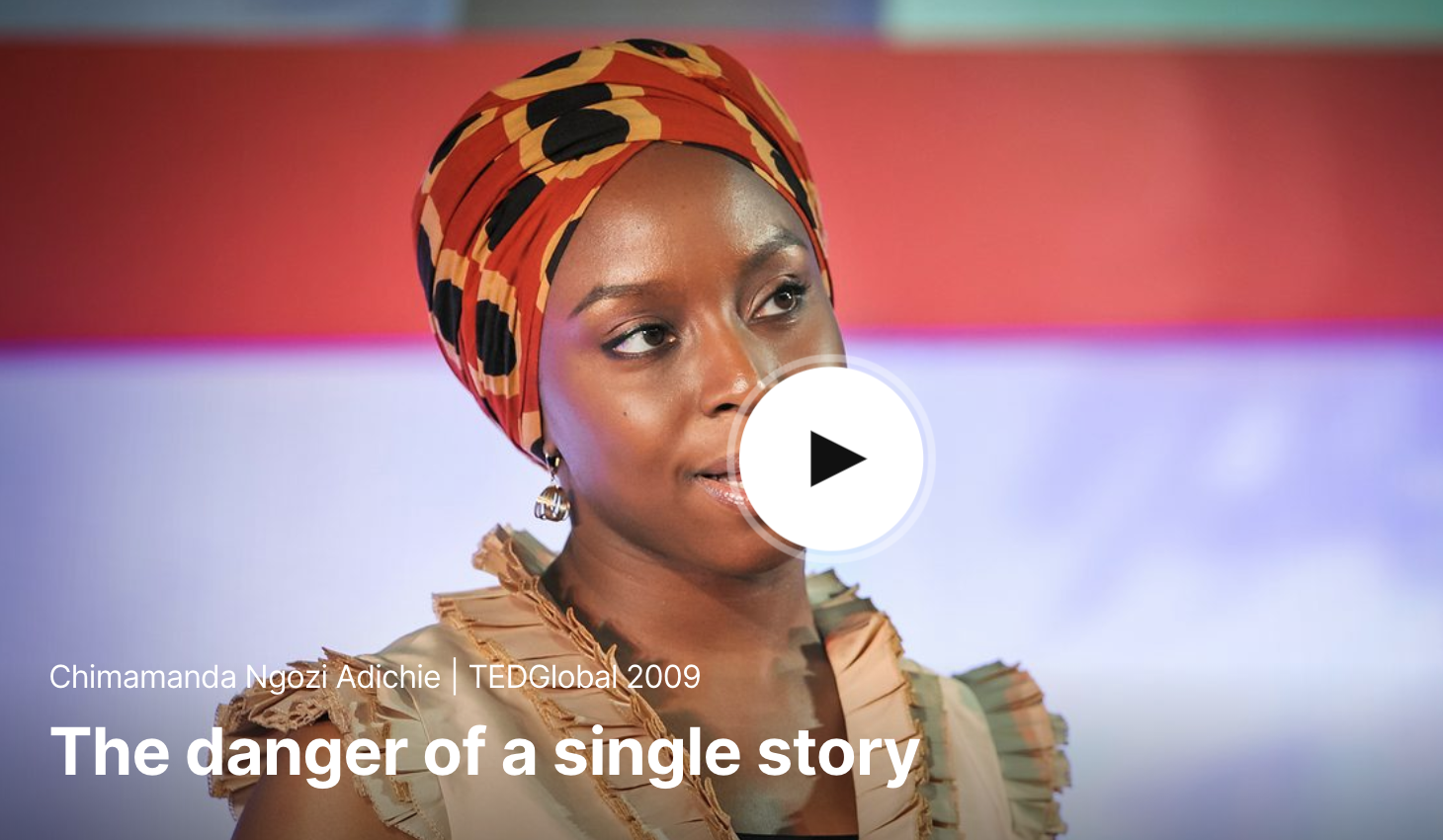
Perhaps the setting lulled you into thinking that you know the people involved. How easy it is to assume that everyone at a twelve-step meeting has only one salient characteristic: their addiction. And yet…while everyone at the meeting has come there for support in coping with the effects of addiction, each one has his or her or their own path that’s led to this point. Each individual speaker is much more than the story of addiction that brought them to this moment. As beautifully expressed by Nigerian author Chimamanda Ngozi Adichie, in her TED Talk, The Danger of a Single Story, we are all made up of multiple storylines and multiple threads.

Screen Shot 2020-02-23 at 9.22.36 PM

It is tempting — nearly inevitable — to assume that we know somebody because we know one or two or even five things about them. Yet every single one of us contains multiple experiences, multiple cultures, multiple points of view.

What does Judaism do with this? How does our sacred wisdom prepare us to take this in, to navigate this space of riotous color and shimmering individuality? 

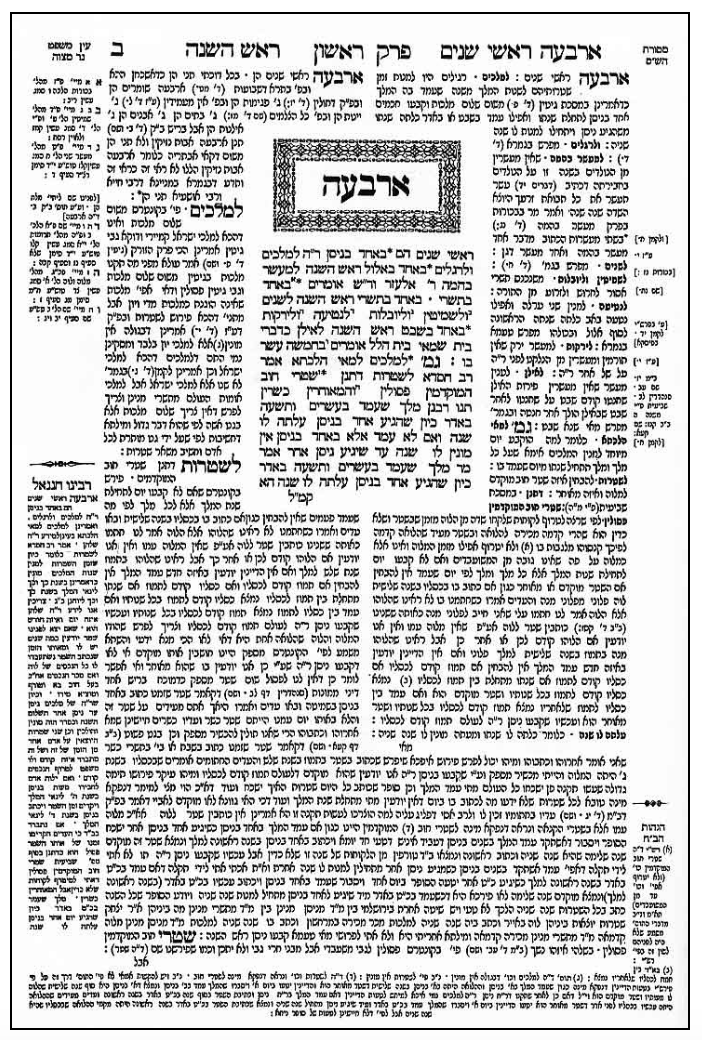
Screen Shot 2020-02-23 at 5.57.13 PM

Consider a page of Talmud. Laid out like a puzzle, or a paper with every inch of margin scrawled with notes and responses and questions, the Talmud is replete with conflicting ideas, interpretations, and viewpoints playing out on the page. Jewish learning is a boisterous conversation across time and space and involving multiple people, sources, and ideas. 

Like a page of Talmud, each of us is a flavorful combination of many different ideas, themes, characteristics, and experiences.

The multiplicity of identity has been playing in my mind quite a bit these past few days, as the news of basketball great Kobe Bryant’s death in a helicopter crash spread. This sudden, tragic loss of a young man is complicated by the fact that in 2003, Bryant was accused of raping a nineteen-year-old woman in a Colorado hotel. The charges were dropped when the woman declined to testify in court. She later brought a civil suit, which was settled out of court. Eventually Bryant acknowledged that he regarded their encounter as consensual sex while his accuser did not. He apologized.

Following this awful incident, Bryant went on to live his life in ways that suggest he learned and grew and changed. He became an outspoken supporter of women’s athletics. He eventually came to use his celebrity to support political causes that were meaningful to him. He became a father to four children, one of whom, sadly, died with him in the crash. 

I do not condone rape or sexual assault, but I do absolutely condone teshuvah. My feelings are complicated as the story of Bryant’s life and death plays out in the media against the backdrop of the pluralism learning my cohort has recently engaged in. If our lives all comprise multiple threads, what if one of those threads is truly awful? Is an otherwise good life ruined by one horrific act? Can an array of generous, wholesome choices, including a genuine apology, atone for one crude and violent one? What is the sum of a life?

We learned in our pluralism seminar that one definition of idolatry is the isolation and worship of a single aspect of the Divine, to the exclusion of other characteristics. Our teacher, Rabbi Sharon Cohen Anisfeld, extended the definition, writing, “It is similarly idolatrous to take one aspect of a human being — created in the divine image — and mistake it for the whole.” We are — each and every one of us — created in Gd’s complicated image, our very ordinariness full of mystery.

One way to understand Gd’s many facets is as multiple pathways to access the Divine. The Sfat Emet’s read on Sh’mot 20:15, in Rabbi Arthur Green’s translation, says: “All the people saw the voices. The voice was that which said, ‘I am YHWH your Gd.’ Each one of Israel saw the root of his or her [or their] own life force.” In this interpretation we see the interplay between singular and plural (voice and voices), the ways in which Gd is One and yet can be understood in infinite ways. Individual senses are blurred, such that sound is both seen and heard. Yet the voice that comes to each person is exactly the right voice for him or her or them, a voice tuned exactly to their frequency. 

Think also of the role of the new year in the liturgy and the calendar cycle: we celebrate the new year in four different ways and at four different times, focusing this time on redemption and this time on nature, this time on getting our economic accounts in order and this time in accounting for our souls and deeds. But day by day, we call for blessing on the year as part of the tefillah, asking Gd to make this year the best among the best. Each day is both a beginning and a continuation, each year a whole and a part.

One beauty of our tradition is that there both is and is not a single story of Gd. When addicts turn to a higher power, as in the vignette that opened this post, they are seeking the same thing — an anchor against the disorienting forces of addiction — but they each seek the aspect of it that will keep them, each in the fullness of their own individuality, centered. Just as the addicts resemble one another in one way but are thoroughly unique in other ways, so it is with Gd. The mechanic’s Gd and the caregiver’s Gd, the proud father’s Gd and the bereaved daughter’s Gd are One and not the same.